
The Forecast Said “Epic” — What Happened?

Spend more than five minutes with a landscape photographer and you’ll hear it.
The sigh. O The Sigh!!!
The thoughtful squint at the horizon.
The slow shake of the head.
“It’s too windy.”
“There’s no wind at all.”
“If only the tide was out.”
“If only the tide was in.”
“Too much blue sky.”
“Not enough light.”
“If only that cloud would move slightly to the left.”
“This shot needs a bit of fog”
“This shot needs a bit of snow”
We are, collectively, a support group for unmet meteorological expectations.
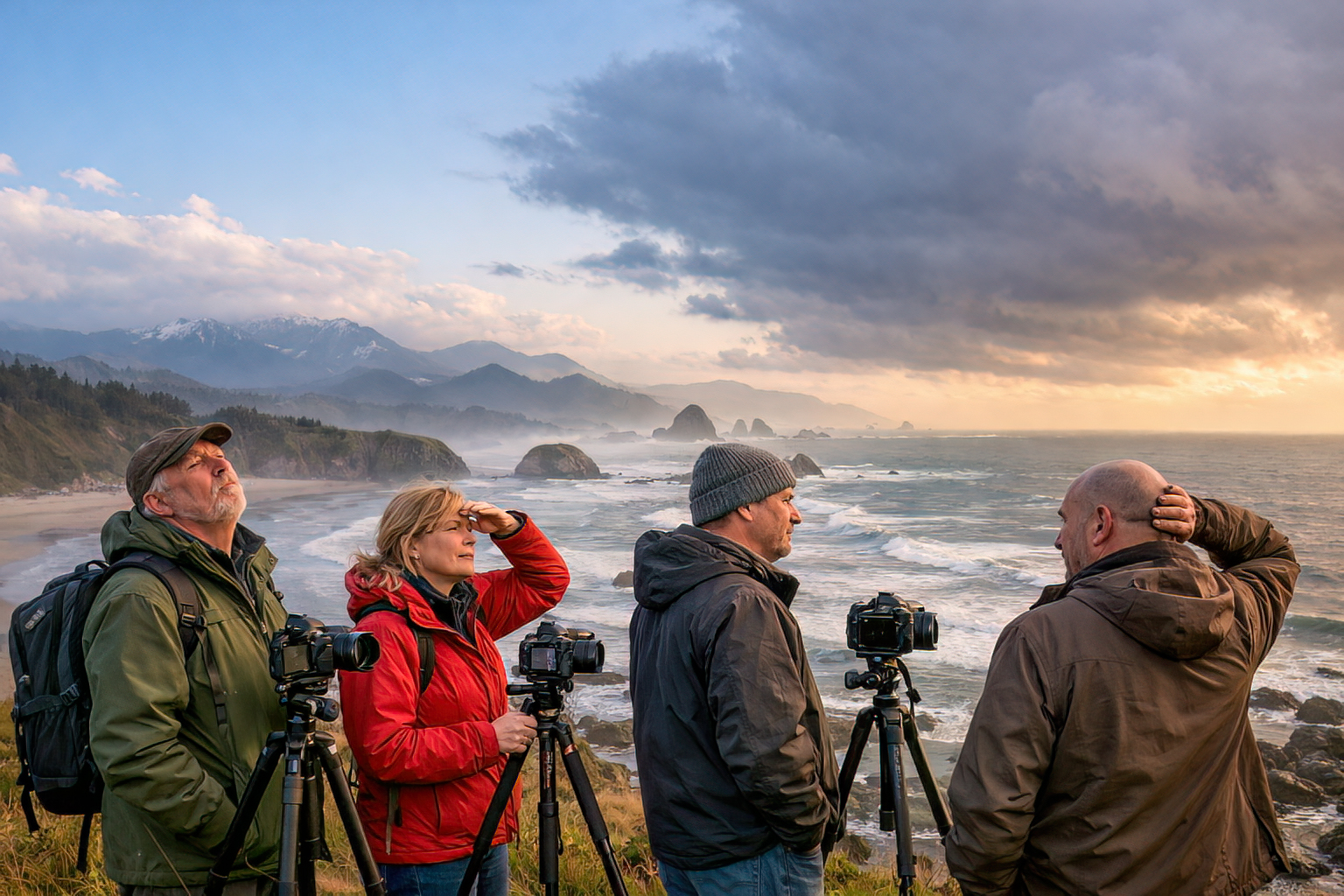
The strange thing is, nobody forced us into this. No one said, “You must wake at 4:12am and stand in a marsh while being sandblasted by drizzle.” We chose this life. We voluntarily carry bags heavy enough to qualify as resistance training. We climb hills in darkness. We scout beaches at low tide. We refresh weather apps like day traders watching the stock market.
And yet, when we finally arrive at the location we’ve been planning for days — sometimes weeks — what do we do?
We complain.
“It was better last week.”
Last week. The golden age. The mythical moment when everything aligned. Last week there was snow. Or mist. Or massive waves. Or the kind of sky that makes strangers gasp. Last week was perfect.
Except, of course, last week we were probably standing there saying, “It would’ve been amazing if there’d just been a bit more light.”
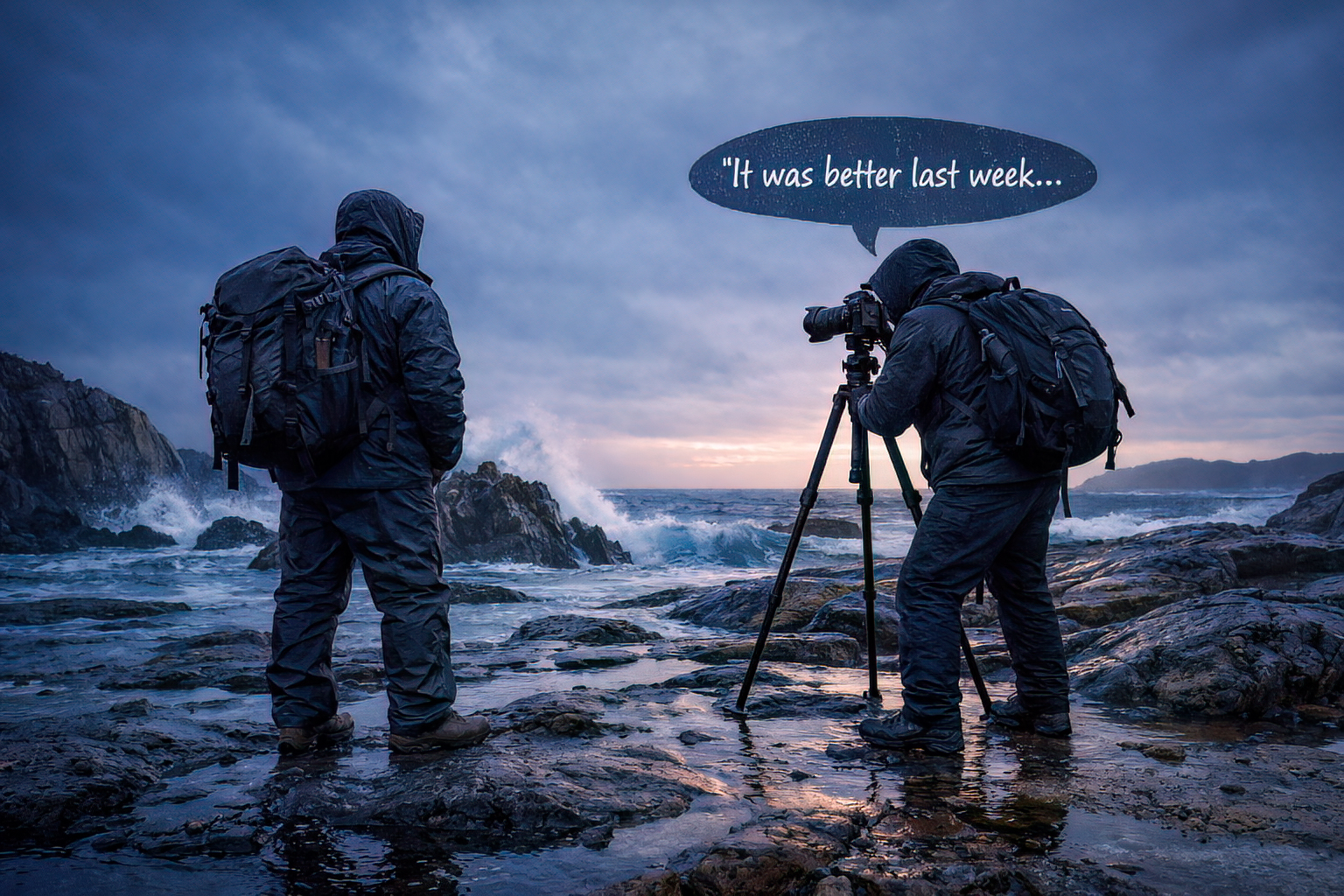
There’s always something. Too windy and the tripod is shaking. Not windy enough and the water is flat and lifeless. Too much cloud and the scene feels heavy. Too little cloud and we complain about boring blue skies. The tide is wrong. The sun is in the wrong place. The sky is happening somewhere else. We arrived an hour too late. Or an hour too early.
In fact, if nature ever did align perfectly with our expectations, I suspect we’d squint at it suspiciously and say, “I don’t know… it feels a bit obvious – it’s going to look photoshopped.”
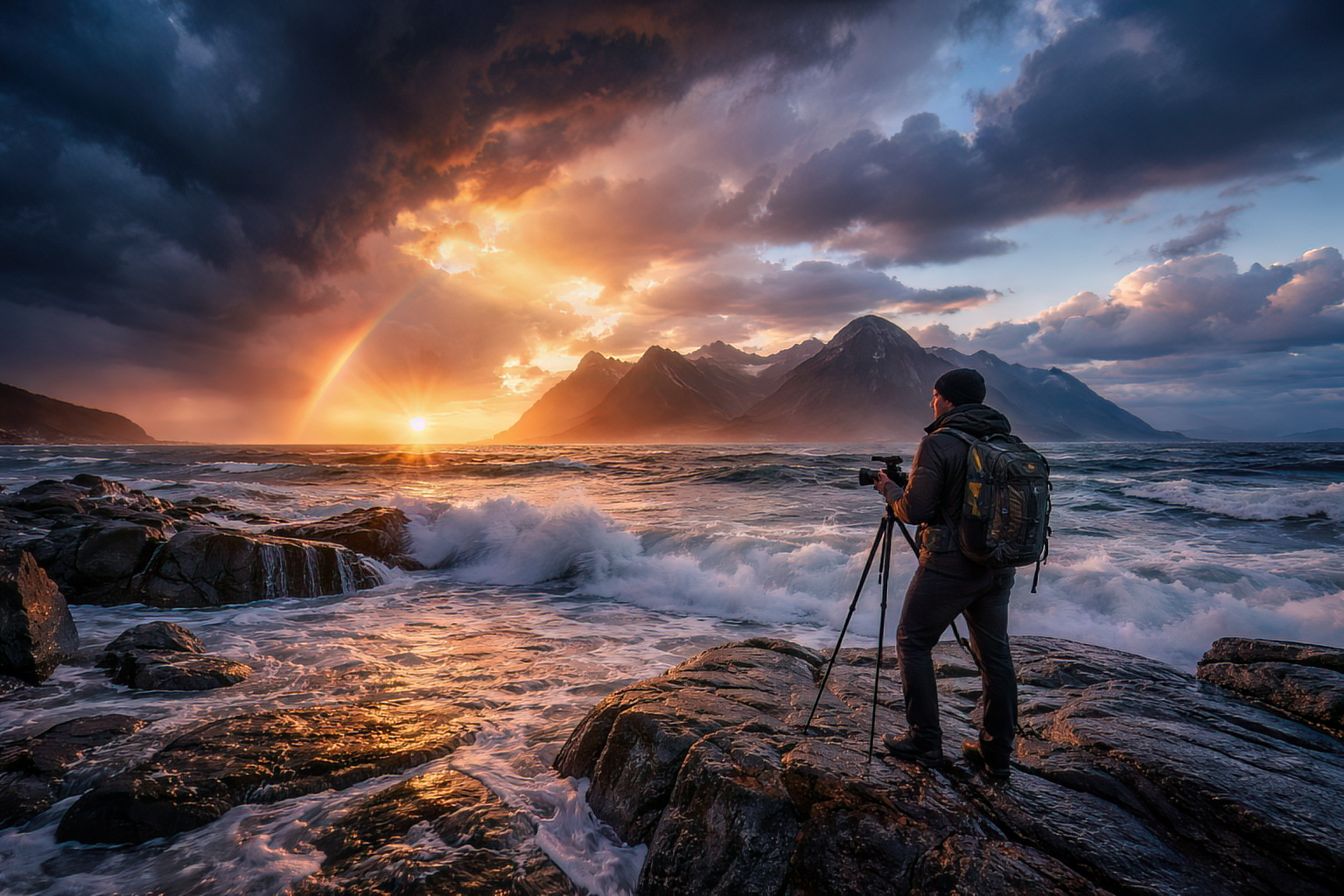
We have very selective memories.
There is always something slightly wrong. Too windy and the tripod is vibrating like a tuning fork. Not windy enough and the water is lifeless glass. Too much cloud and the scene feels flat. Too little cloud and the sky is “boring.” The tide is inconvenient. The sun is in the wrong place. The light peaked ten minutes ago. Or it might peak in ten minutes. Or it peaked yesterday.
We say things like, “If only that sky was happening over here.”
As if the sky is a stage production that forgot its cues.
The truth is, landscape photographers can be world-class negotiators with reality. We’re constantly trying to renegotiate the terms of the day.
“Could we just have a bit more drama?”
“Just a touch of side light?”
“Maybe some snow. But not too much snow – just on the peaks and not on the roads.”
We want weather à la carte.
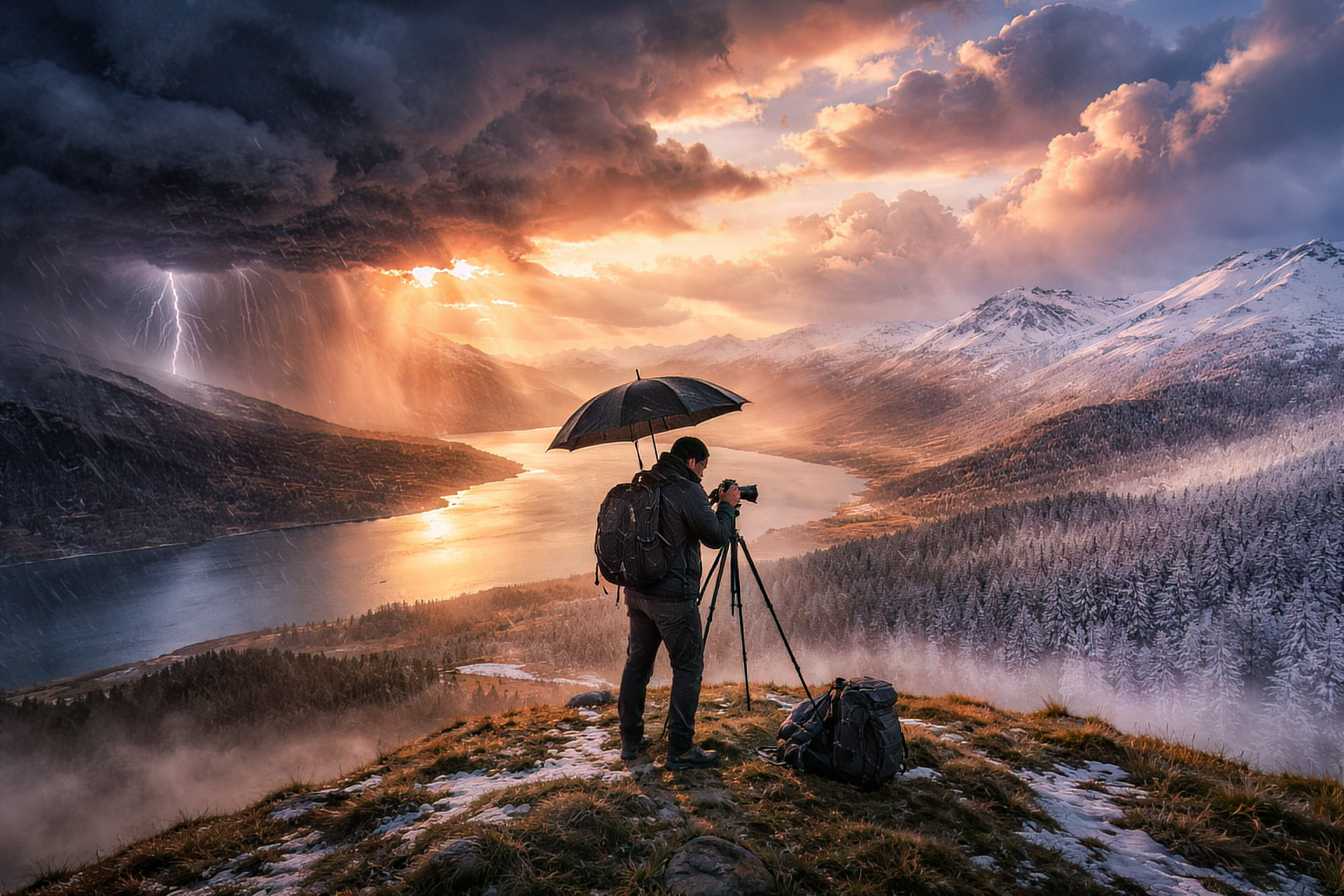
But here’s the uncomfortable truth wrapped in all this humour: the weather is our favourite scapegoat.
When we don’t come home with the image — the one we imagined — it’s rarely because we didn’t explore enough, move enough, or think creatively enough. It’s because “the conditions weren’t right.”
It’s a comforting story. It protects the ego. It tells us that greatness was inches away — just one better cloud formation from being realised.
It means we didn’t fail. The weather did.
And yet landscape photography doesn’t work like that.
Nature is not a production team. The mountains are not props. The sea does not rehearse. The tide does not care about your composition. The snow falls when it falls — usually the day after you leave.
Nature is in charge. Not us.
And perhaps that’s what unsettles us most.
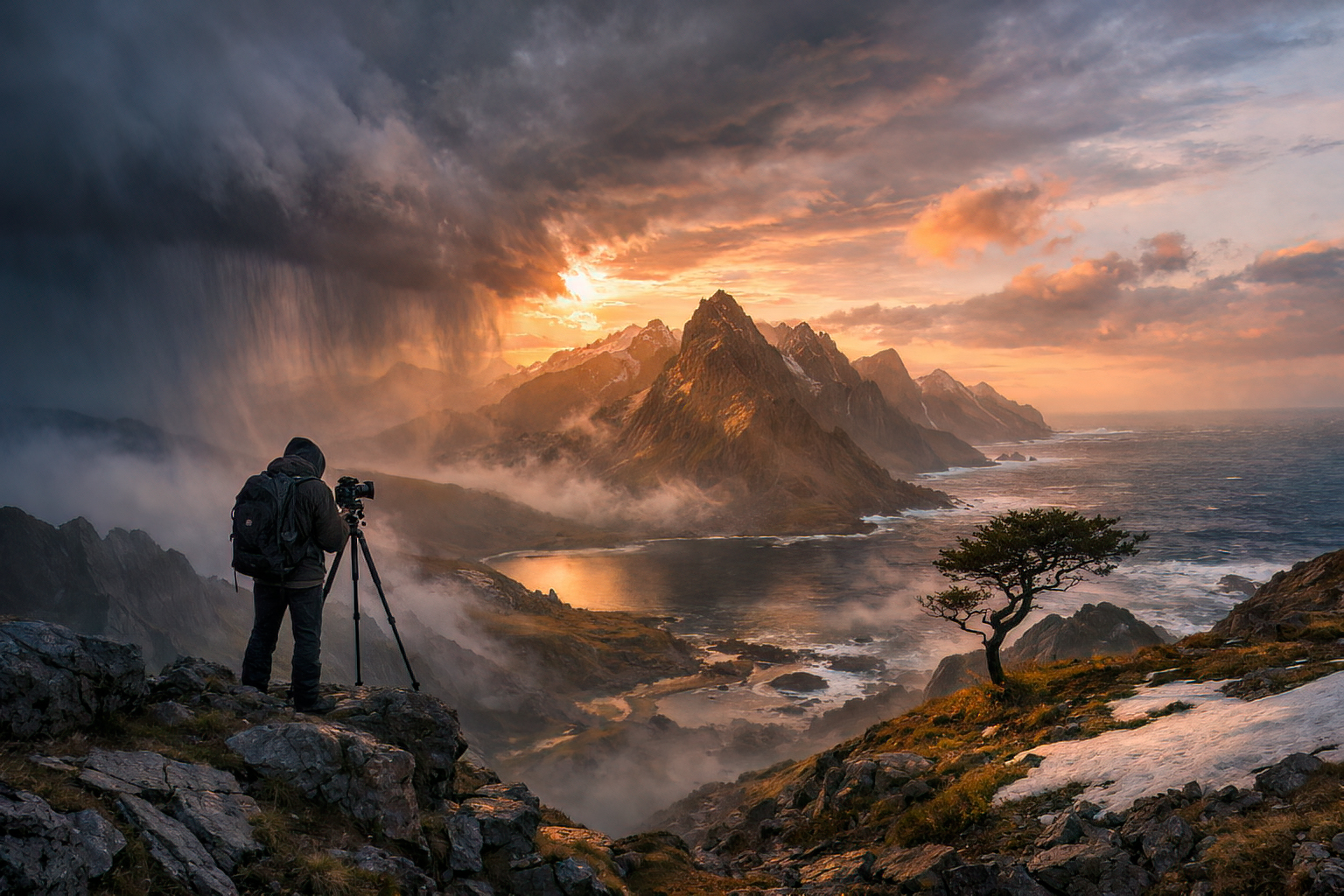
We plan meticulously. We check sun angles, moon phases, tide charts, wind direction. We arrive armed with knowledge and technology and optimism. And then nature casually rearranges everything.
Clouds roll in early.
Or not at all.
The wind drops.
Or howls.
And we are reminded, very gently — or sometimes very bluntly — that this isn’t a controlled environment.
But maybe that’s exactly the point.
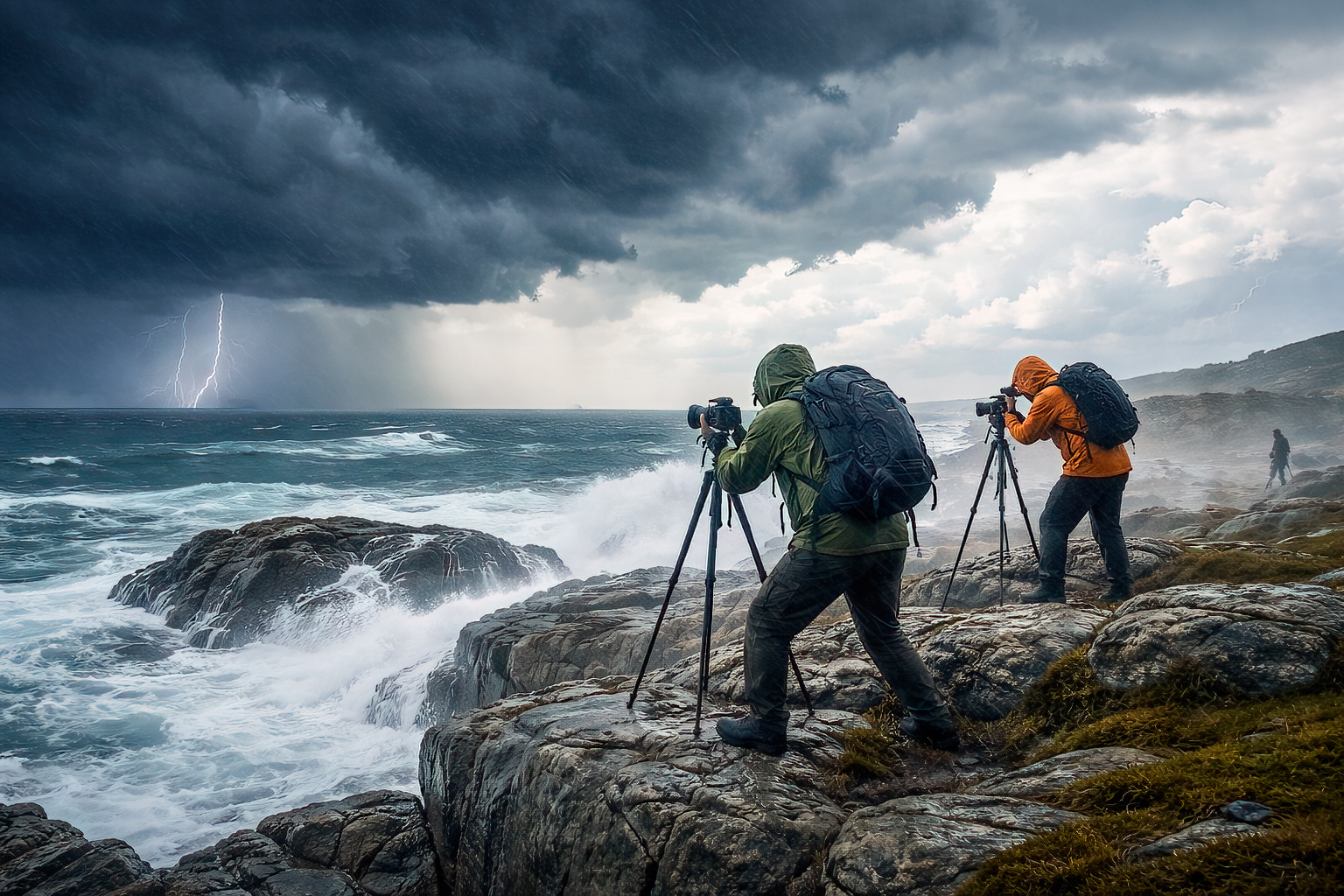
Anyone can make a decent photograph when the conditions are spectacular. When the sky is on fire, the mountains dusted with fresh snow, and mist curling perfectly through the valley, the scene is doing a lot of the work. You mostly just need to avoid cutting the horizon in half and remember to remove the lens cap.
Epic conditions are generous. They flatter us.
But average conditions? They test us.
Flat grey skies demand subtlety. Harsh midday light demands intention. Strong wind demands creativity. No wind at all demands patience. Big waves bring chaos. Small waves bring calm. Each one asks a different question.
What does this light suit?
What details have I overlooked?
What mood does this so-called “bad weather” create?
A moody overcast sky can be perfect for woodland scenes. Soft light can reveal colour without harsh contrast. Heavy clouds can create atmosphere and intimacy. Bright blue skies can work beautifully with bold, graphic compositions.
There is no such thing as useless weather. There is only unused opportunity.
But that requires something uncomfortable: acceptance.
Acceptance doesn’t mean lowering your standards. It doesn’t mean pretending you don’t wish for something more dramatic. It means shifting from resistance to response.
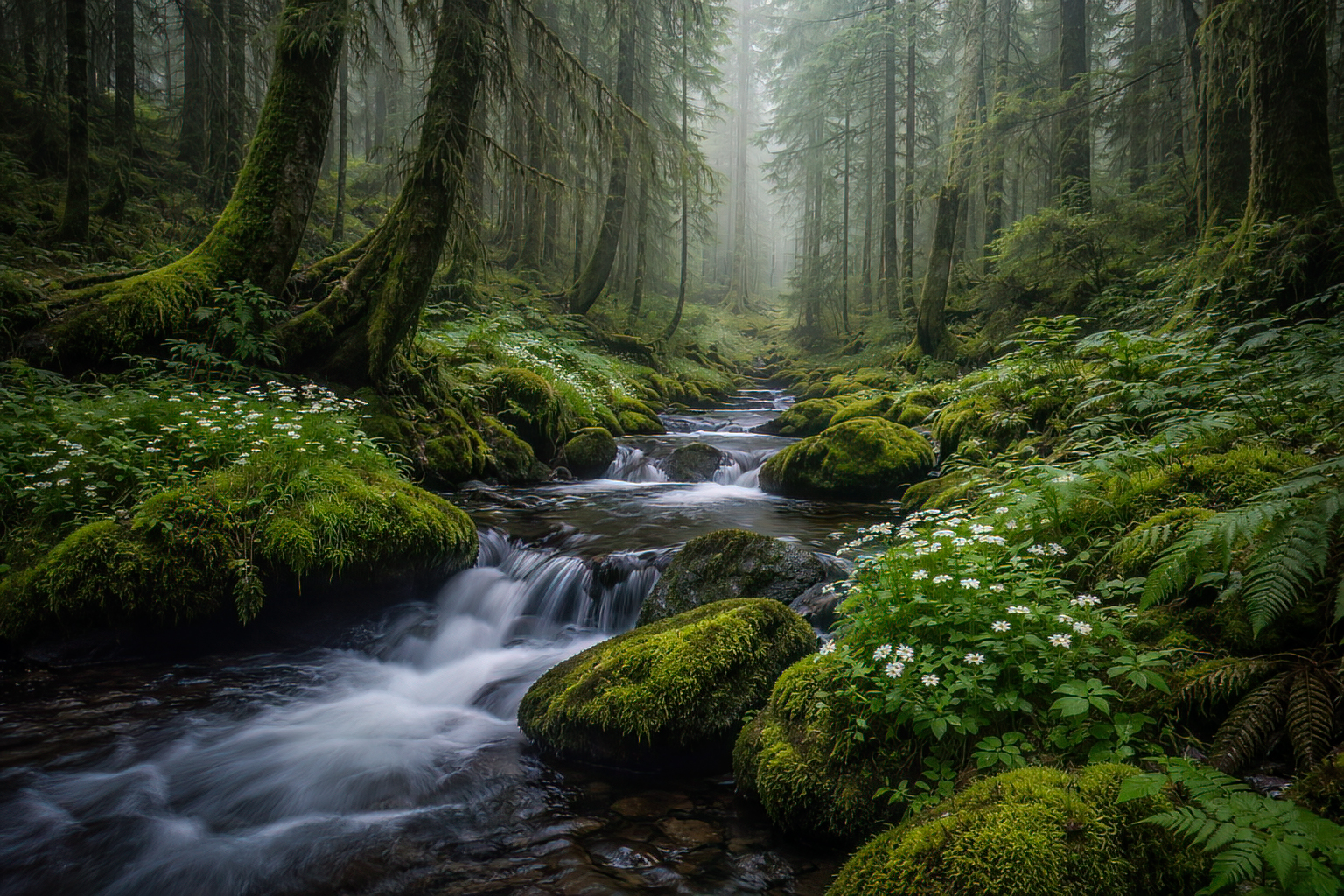
Instead of standing there saying, “It’s not what I wanted,” you ask, “What is this?”
Instead of waiting for conditions to improve, you work with what’s present.
Instead of blaming the sky, you explore the foreground.
There’s a subtle but powerful difference between those approaches.
Because ultimately, landscape photography isn’t about controlling nature — it’s about responding to it.
The word “landscape” itself suggests something vast and untameable. And yet we sometimes approach it like frustrated directors on a film set.
“Can we reset that wave?”
“Can we move that cloud?”
“Can we try that sunset again?”
No. We can’t.
And that’s the beauty of it.
There is something profoundly grounding about standing in front of a scene that doesn’t care whether you get the shot. The wind will blow whether you’re ready or not. The tide will turn whether your filters are attached or still in the bag. The light will change without asking your permission.
You are not in control.
You are present.
And perhaps that is the deeper gift.
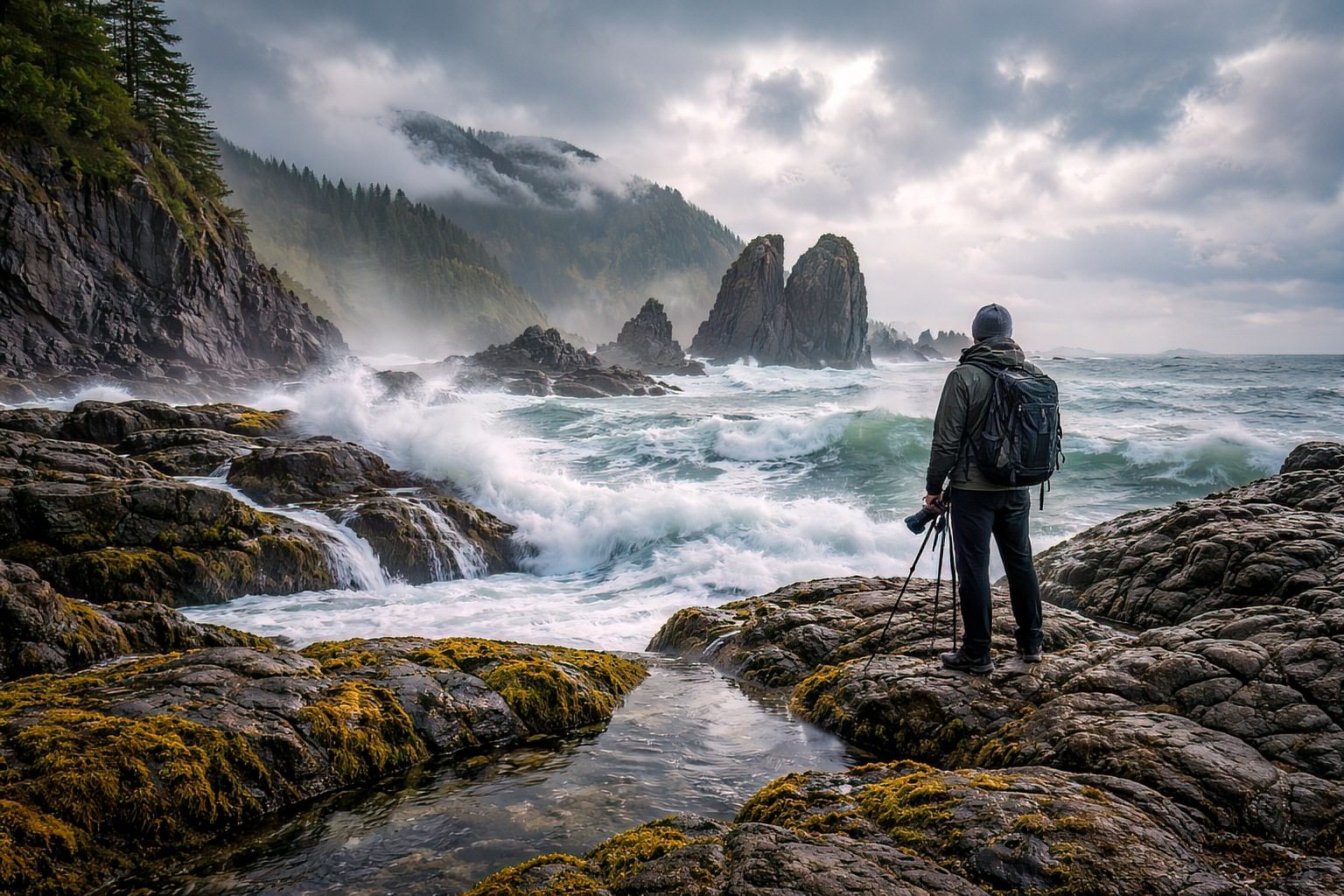
Because when we stop treating the weather as an obstacle and start seeing it as the assignment, everything changes. We move more. We look harder. We experiment. We simplify. We notice smaller details — patterns in rocks, textures in sand, the way grasses bend in the wind.
We become more observant.
And isn’t that what makes a good photographer in the first place?
The ability to see.
Not just when the sky is dramatic. Not just when the forecast promises “epic.” But when it’s ordinary. When it’s subtle. When it’s quiet.
In fact, some of the most satisfying images come from days that felt uninspiring at first. The days when you nearly packed up early. The days when you told yourself, “It’s not happening.”
Because those are the days you had to work. To adapt. To think differently. To earn the image.
There’s a quiet pride in returning home knowing you made the most of what you were given. Not what you hoped for. Not what you saw on social media last week. Not what happened on someone else’s workshop.
What you were given.
It’s easy to romanticise perfect conditions. It’s harder — and more honest — to embrace imperfect ones.
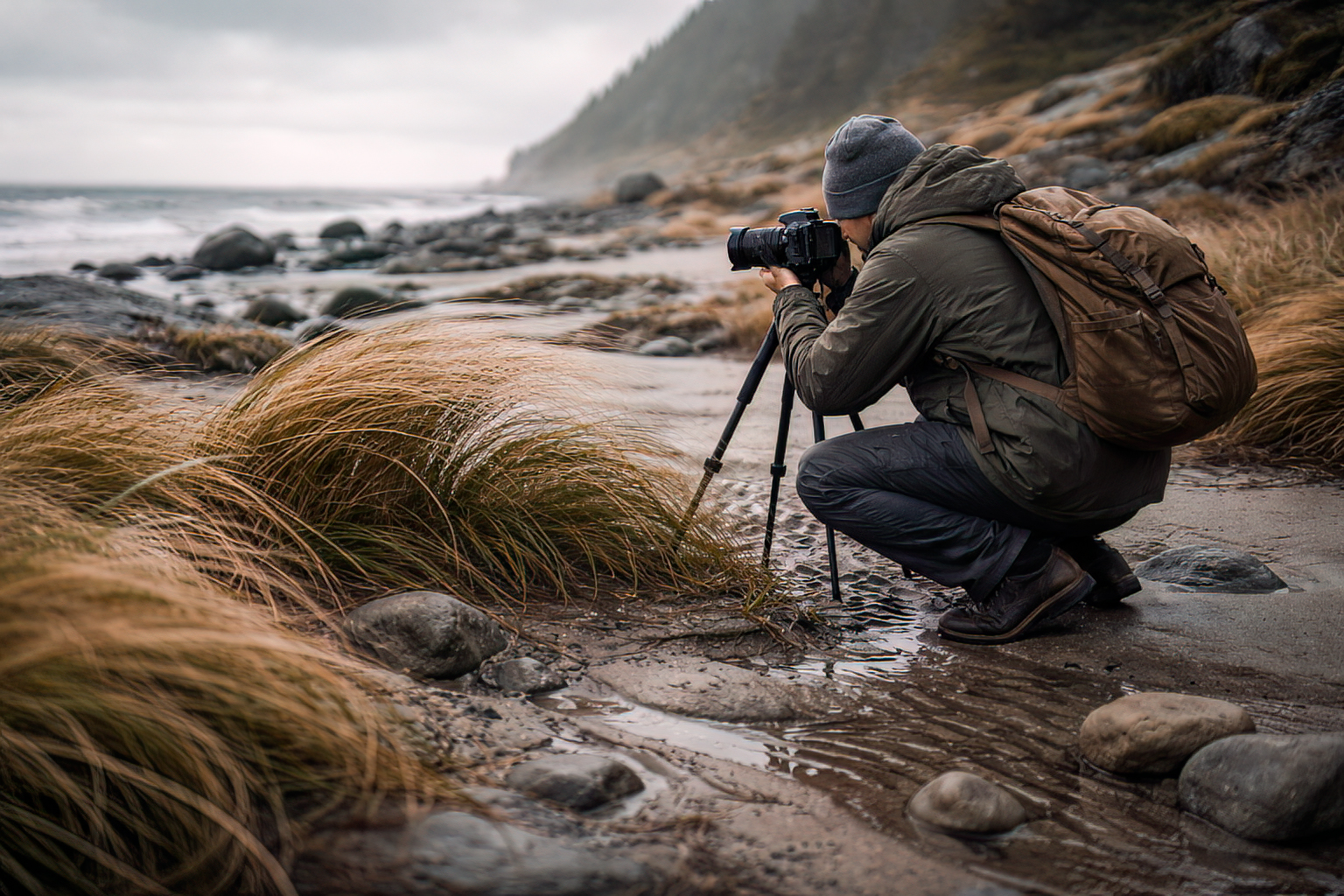
And let’s be honest with ourselves: sometimes the weather isn’t the reason we didn’t get a strong image. Sometimes we were distracted. Or impatient. Or too fixed on one composition. Sometimes we arrived with a pre-visualised shot and refused to let it go.
We were waiting for the sky to apologise for not matching our expectations.
Meanwhile, the landscape was offering something else entirely.
When we accept that nature owes us nothing, we’re free. Free from frustration. Free from comparison. Free from the endless loop of “if only.”
“If only there were bigger waves.”
“If only there was snow like last week.”
“If only we’d arrived an hour earlier.”
There will always be an “if only.”
But there is also always a present moment.
And perhaps that’s the real test of how good a photographer we are — not whether we can capture perfection, but whether we can respond creatively to imperfection.
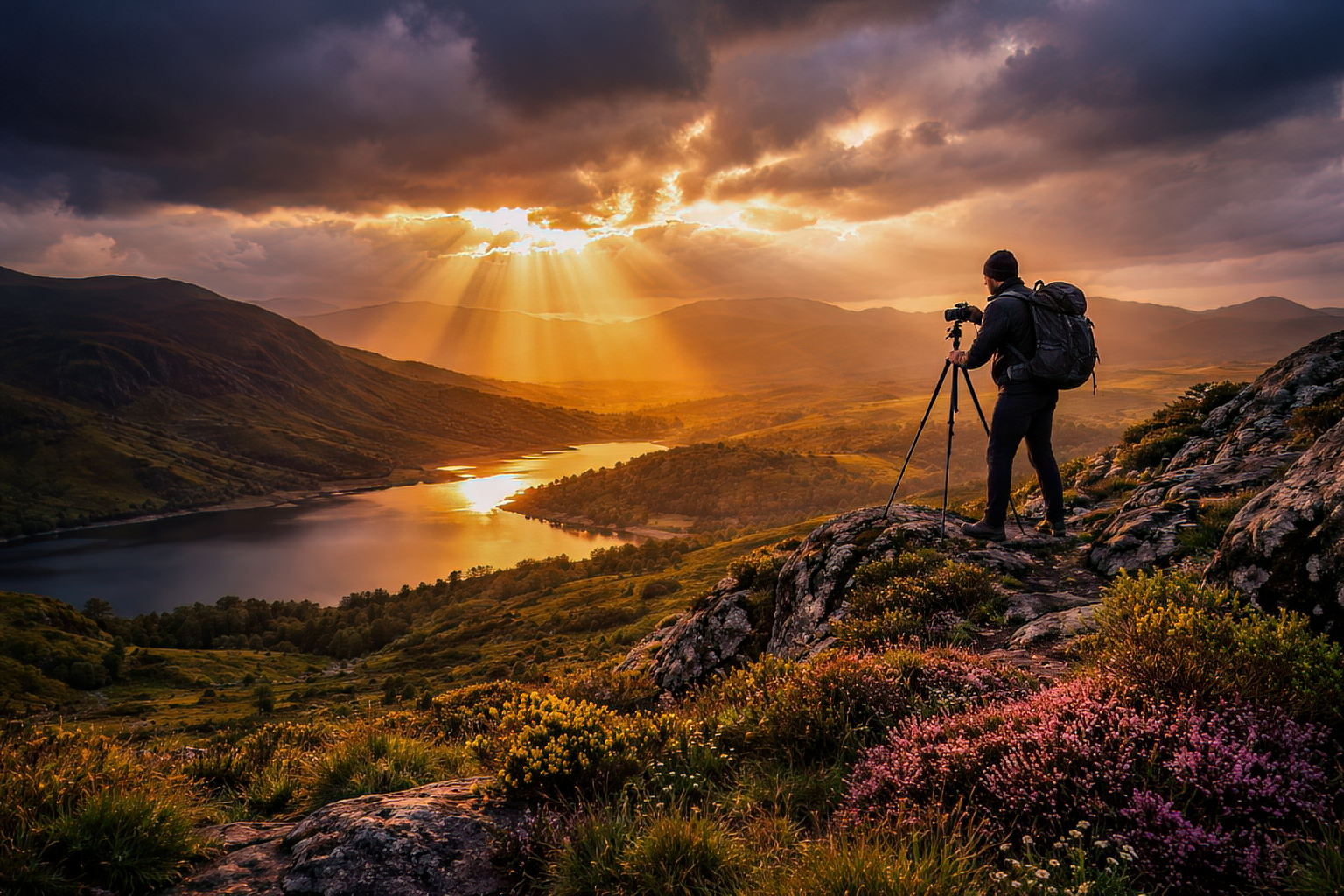
Can we return home having created the best we could, given the conditions we had?
Can we appreciate the experience, even if the portfolio didn’t expand?
Can we acknowledge that sometimes the win isn’t the image — it’s the act of being there?
Standing in wind. Listening to waves. Watching light shift across land that has existed long before us and will continue long after.
We may still grumble. We’ll probably always grumble. It’s part of the culture. It’s part of the ritual. A landscape photographer who doesn’t comment on the light is deeply suspicious.
But maybe the grumble can be affectionate. Self-aware. Light-hearted.
A small smile as we say, “It’s not ideal.”
Because deep down, we know something important:
The weather isn’t the excuse.
It’s the challenge.
And the challenge is the point.
Conclusion
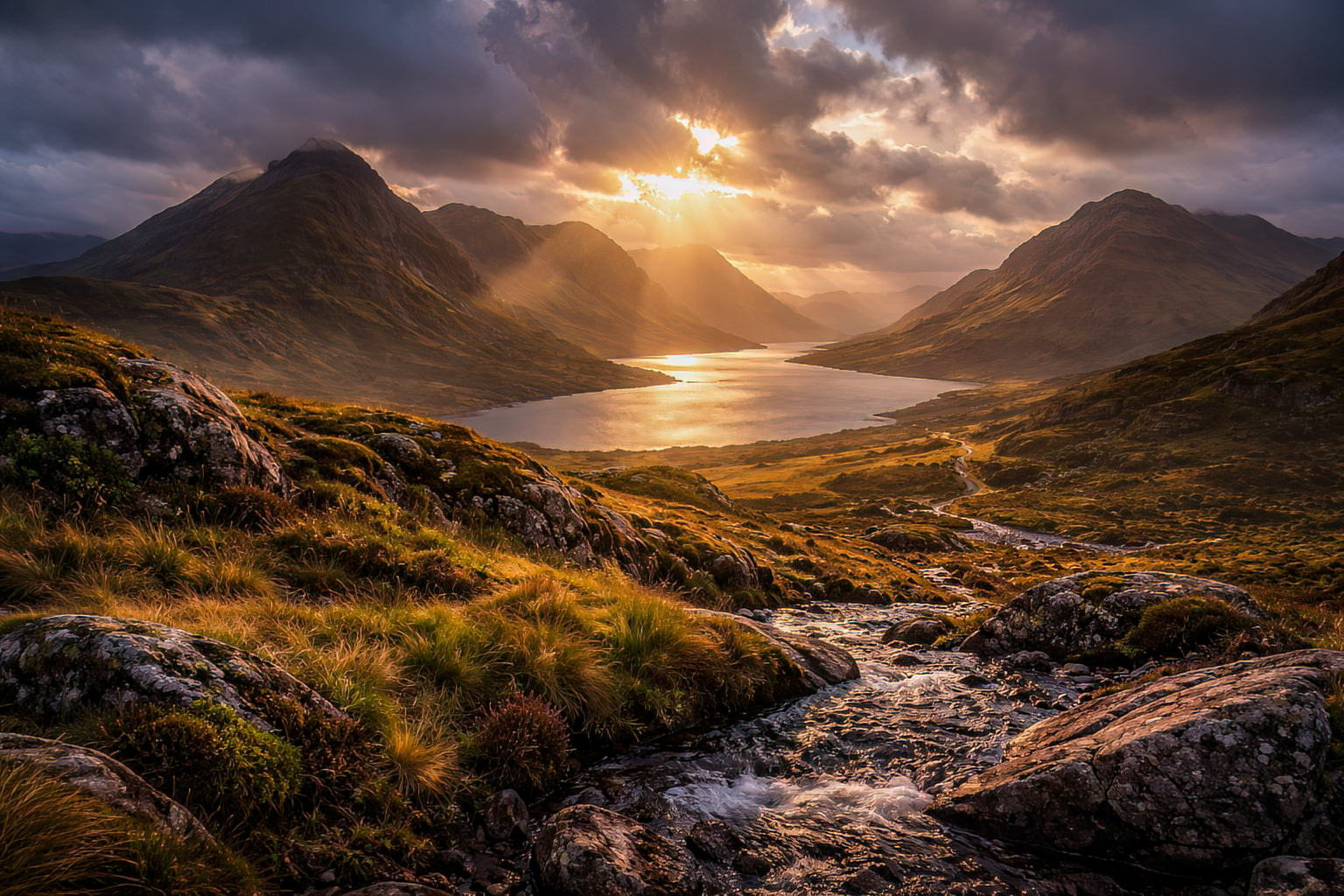
And maybe the real measure of our ability isn’t whether we came home with a portfolio-worthy masterpiece — but whether we embraced the moment, worked the scene, and appreciated the fact that we were out there at all.
Even if it was too windy.
Or not windy enough.

7 Responses
Excellent and inspiring.
Very Excellent and inspiring.
Thank you Rick for your comment – I am delighted you found it interesting.
Inspiring comments how to approach the reality of Landscape photography. Thanks Dean you always will be a source of inspiration.
Thank you Philippe – I’m really grateful for your support! The beauty of landscape photography is that it’s a journey we’re all on together. Keep exploring, keep shooting, and keep finding your own inspiration.
Dean, this was brilliant.
I’ve admired your work, and your words, for a long time, but this one had me laughing and nodding along in equal measure.
Whether it’s AI-assisted or entirely human-crafted honestly doesn’t matter to me. The writing was sharp, the images were properly hilarious, and it captured something very real about the moment we’re living in.
What made me smile most was the timing.
Only moments before reading it, I’d sent a light-hearted WhatsApp “funny” to someone and got back:
“Have you got nothing better to do?”
My reply?
“Well… it’s raining.”
Reading your piece, I suddenly realised that might be the most ironic sentence I’ve typed all week.
Perhaps we all have “something better to do.”
Perhaps sometimes the better thing is simply to laugh.
Well played.
Hi Phil – Thank you — that genuinely means a lot.
I’m especially pleased it made you laugh. If a piece can prompt both a nod of recognition and a proper laugh, I feel like it’s done its job.
There’s something beautifully defiant about choosing a bit of lightness in the middle of everything else clamouring for our attention.
You’re right — perhaps we all technically have “something better to do.”
But every so often, the better thing really is to laugh, to share something daft, to acknowledge the absurdity of it all.
I’m delighted the timing aligned the way it did.
Thanks again for reading — and for taking the time to write such a generous note.
Dean