
The Art of Simplicity in Landscape Photography
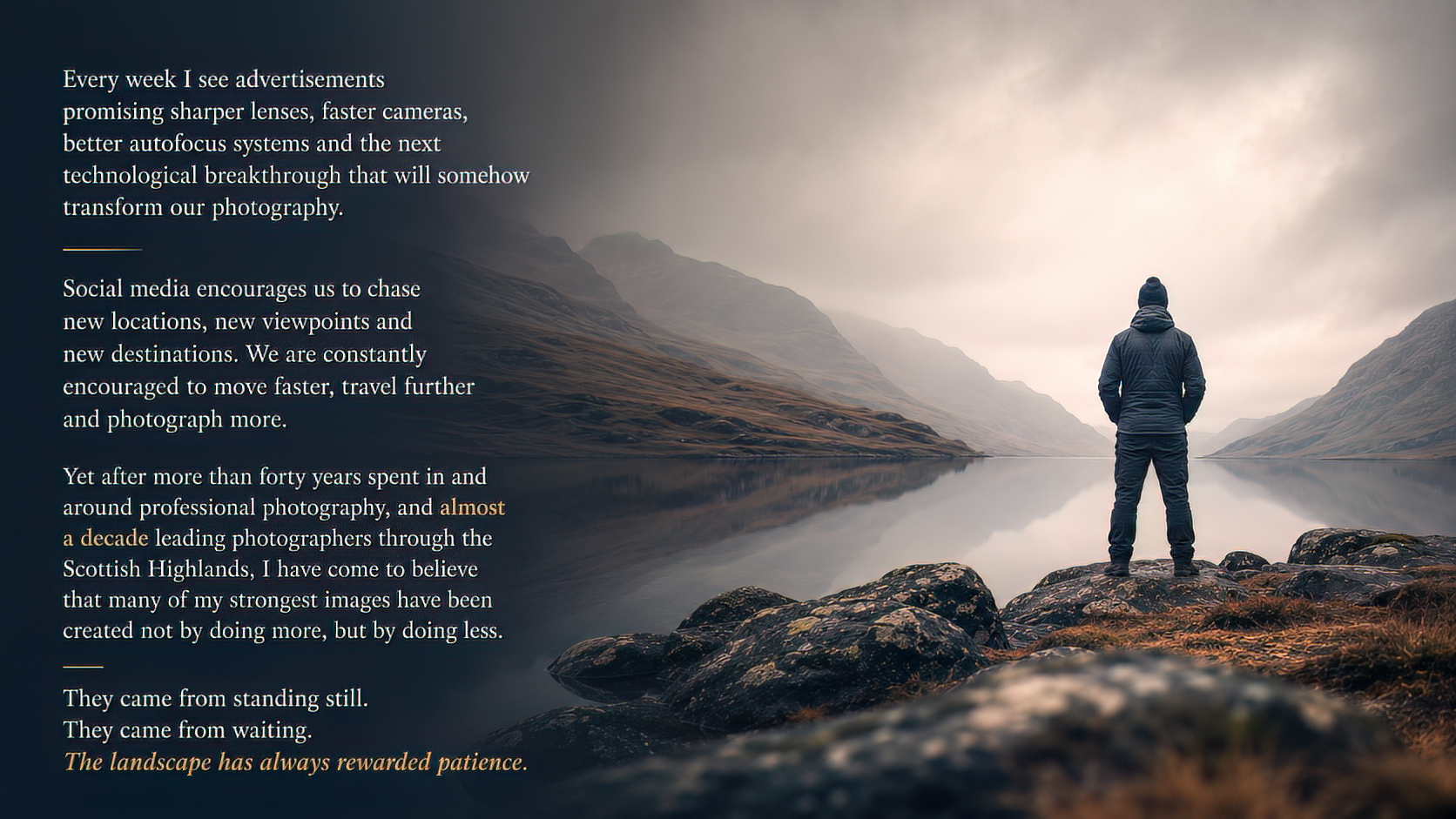
Simplicity Is Not Easy
One of the greatest misconceptions in landscape photography is that simple photographs are easy to create.
The opposite is usually true.
A simple photograph leaves nowhere to hide. When there are only a few elements within a frame, every one of them becomes important. Every shape, tone, texture and line must contribute to the final image.
A cluttered photograph can often disguise weaknesses. A simple photograph exposes them.
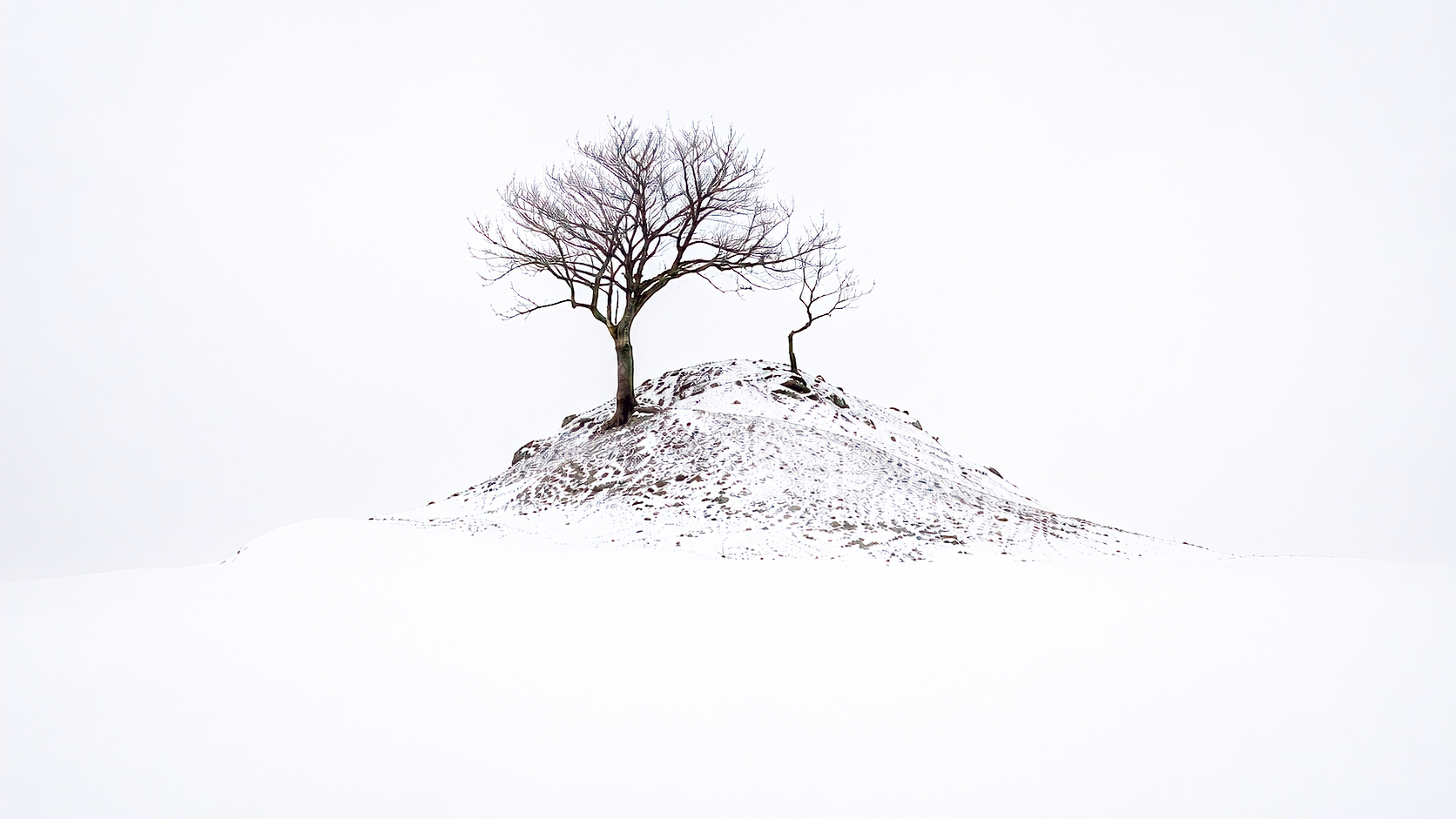
This is why some of the most memorable landscape images contain remarkably little. A solitary tree. A distant mountain emerging from mist. A single wave breaking against a shoreline.
The fewer elements we include, the more carefully we must consider each one.
Learning to See Less
One of the exercises I often encourage photographers to try on my workshops is to stop looking for photographs and start looking for subjects.
There is a difference.
When we search for photographs, we often carry preconceived ideas in our minds. We arrive at a location already knowing what we hope to capture.
When we search for subjects, we become more observant.
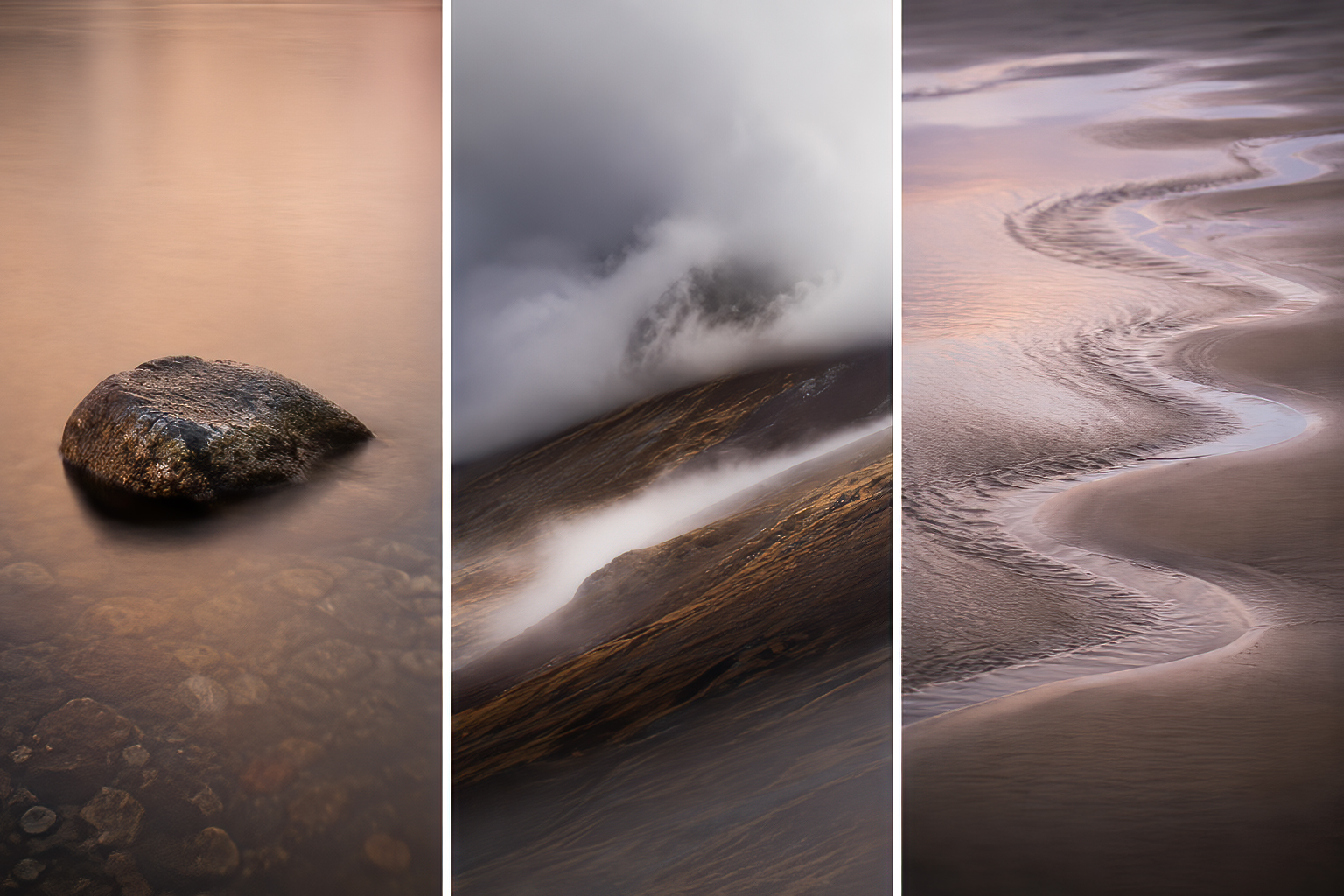
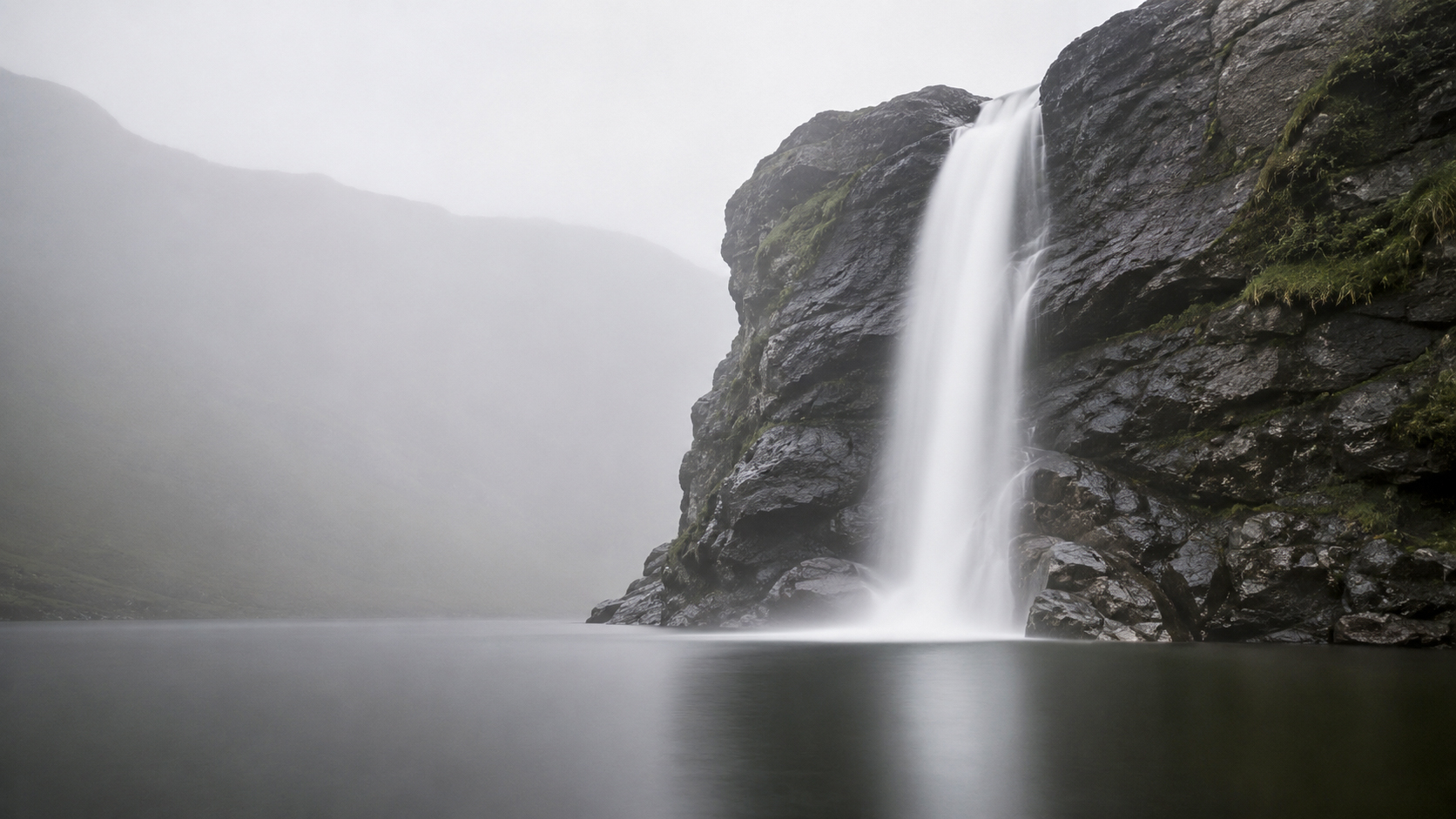
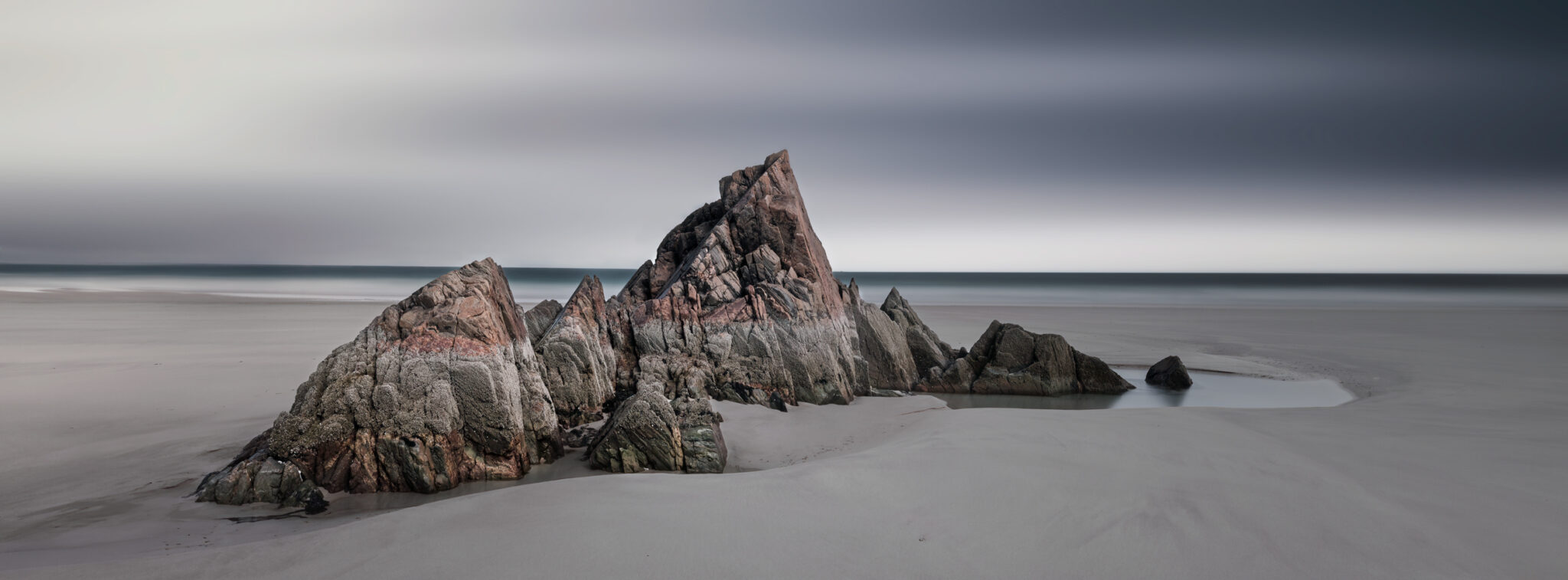
We begin to notice the small details that others walk past. A patch of light on a hillside. A lone rock surrounded by water. Patterns in sand created by a receding tide. A ribbon of mist drifting through a glen.
These quieter subjects often possess a strength and elegance that larger scenes can lack.
The challenge is having the discipline to recognise them.
The Scottish Highlands and the Beauty of Simplicity
Living and working in the Scottish Highlands has taught me many lessons about photography, but perhaps the most important is that the landscape does not always reveal itself immediately.
Visitors often arrive expecting dramatic mountain views, fiery sunsets and spectacular weather. Sometimes they receive exactly that.
More often they receive cloud, rain, mist and uncertainty.
At first this can feel disappointing.
Then something interesting happens.
As visibility decreases, distractions begin to disappear.
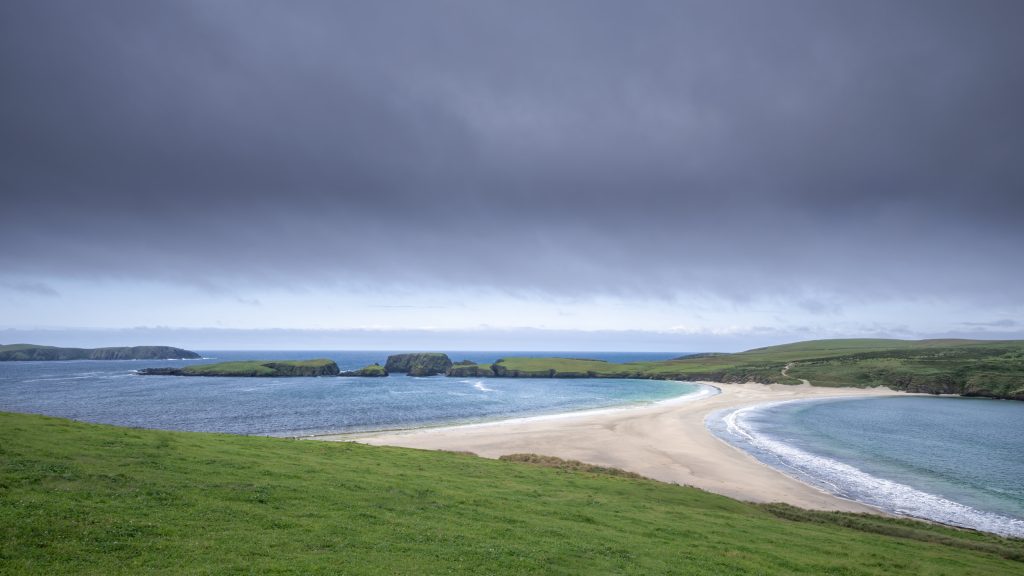
Mist removes background clutter. Soft light reduces contrast. Rain enriches colour and texture.
The landscape simplifies itself.
Many of my favourite photographs have been created on days when the weather appeared unsuitable for photography. The Highlands have a remarkable ability to strip away complexity and reveal the essence of a place.
The Power of Negative Space
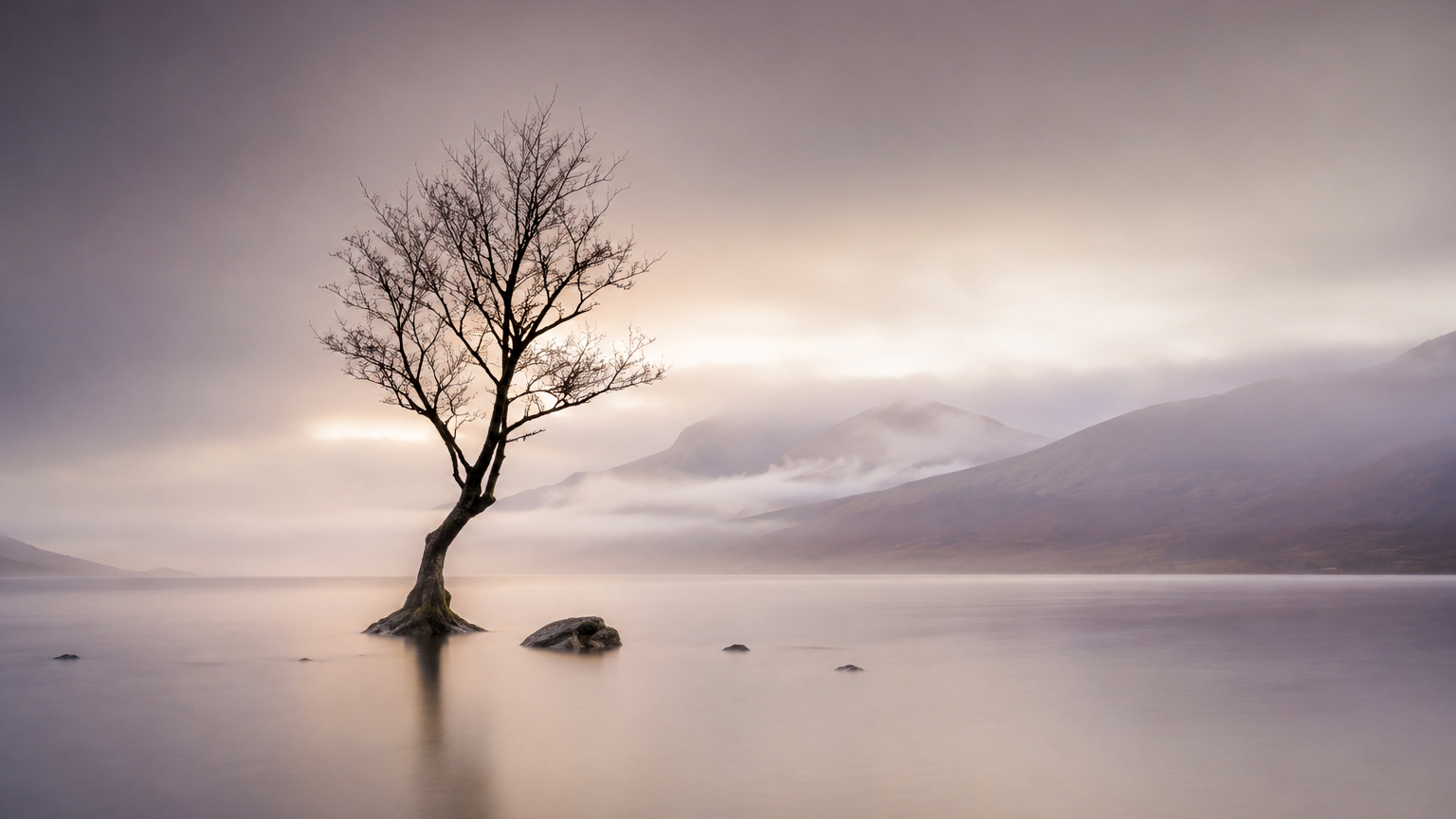
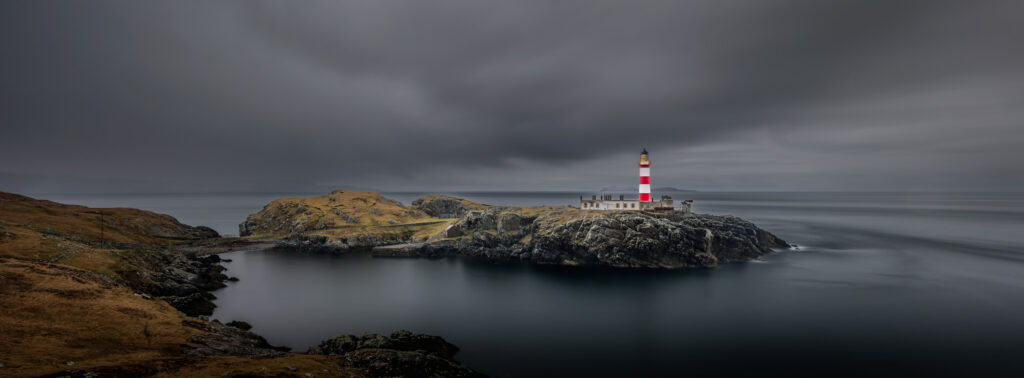
One of the most effective compositional tools available to any photographer is negative space.
Negative space is simply the empty area surrounding your subject.
Many photographers are uncomfortable with it. They feel compelled to fill every corner of the frame with detail.
Yet negative space provides breathing room. It allows the viewer’s eye to rest and directs attention towards the subject.
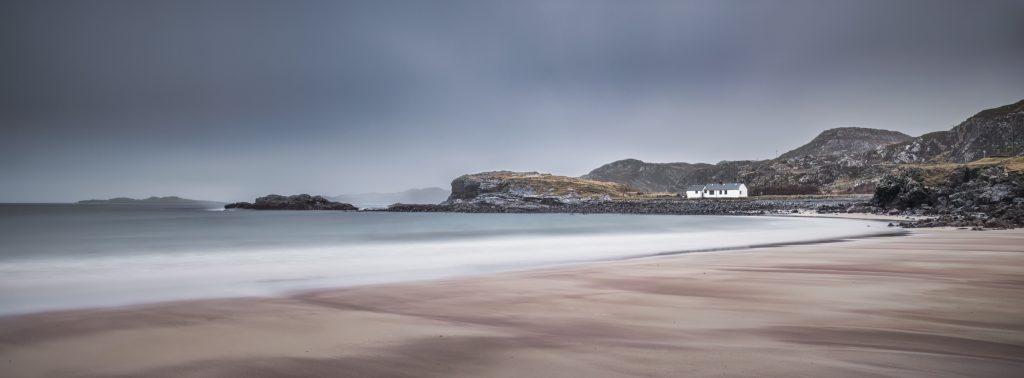
Think of a lone sea stack surrounded by ocean, or a small white cottage beneath a vast Highland sky.
The emptiness is not wasted space.
It is an essential part of the composition.
Without it, the subject loses much of its impact.

Slow Photography
Simplicity and patience are closely connected.
The longer we remain in one location, the more likely we are to see beyond the obvious photograph.
This is something I witness regularly on workshops. Initially photographers are eager to move quickly from one location to the next. They make a few exposures and immediately start looking elsewhere.
Yet the most rewarding moments often arrive after everyone has stopped photographing.
When the light changes.
When the mist drifts across a hillside.
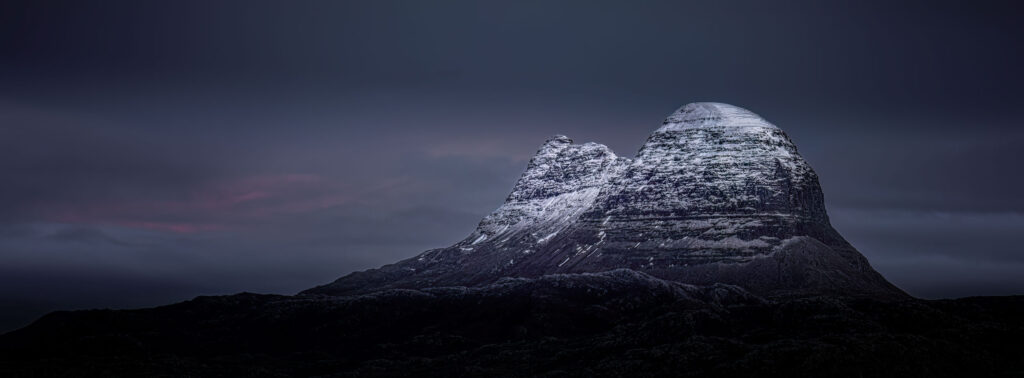
When a shaft of sunlight briefly illuminates a distant peak.
These moments cannot be rushed.
The landscape works to its own timetable.
Learning to slow down is one of the most valuable skills any photographer can develop.
The Courage to Simplify
Creating simple photographs often requires confidence.
It means resisting the temptation to include more. It means ignoring the pressure to photograph everything. It means trusting that a single subject can carry an image.
In a world that constantly encourages us to do more, buy more and photograph more, simplicity can feel almost rebellious.
Yet simplicity allows us to create photographs with greater clarity, stronger emotion and more enduring impact.
The viewer is not distracted by countless competing elements. Instead, they are invited to engage with the photograph on a deeper level.
Final Thoughts
After many years behind a camera, I have come to believe that landscape photography is not really about adding things to a frame.
It is about removing them.
Removing distractions.
Removing clutter.
Removing unnecessary complexity.
The goal is not simply to show a landscape.
The goal is to communicate how it felt to stand there.
The next time you find yourself standing in the Scottish Highlands, surrounded by mountains, lochs and endless possibilities, resist the temptation to photograph everything.
Instead, choose one thing.
Slow down.
Wait.
Allow the landscape to reveal itself.
You may discover that less really is more.
8 Responses
Beautiful images and relatable words
Hi Stephen..Thank you for taking the time to read it and leave such thoughtful feedback—it is very much appreciated.
Thanks, Dean. I thoroughly enjoyed and found very informative your article on mastering simplicity.
I am about to go to the snow regions of Australia (yes we have them)😁 for a high mountain snow workshop.
I will be using your tips to simplify these images, I hope we have plenty of snow and fog.
The winter has not started well, the temperatures have been high for winter here in Sydney.
Snow is not something that I have much experience with, but I hope to be more proficient after the workshop.
Hi Bruce… I’m delighted that you enjoyed the article and found it informative.
A snow workshop in the Australian mountains sounds like a fantastic adventure — and yes, I know Australia has snow, although many people here in Scotland struggle to believe it! 😁
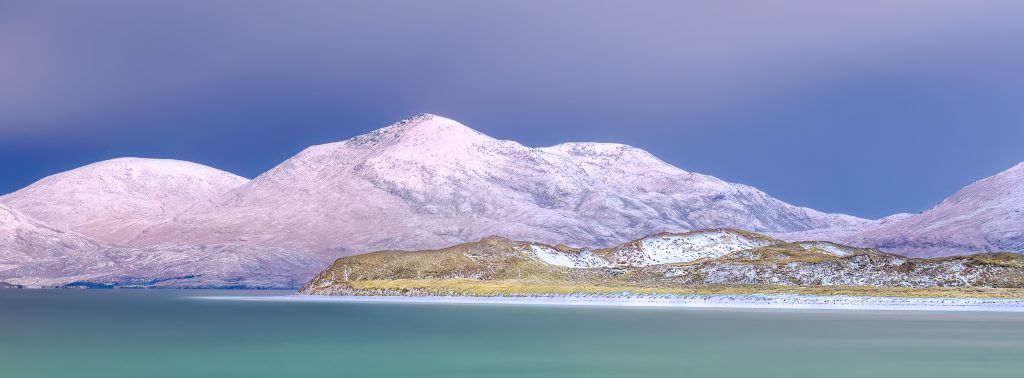
Snow and fog can be a wonderful combination for photography. In many ways, snow naturally lends itself to simplicity because it removes distractions, reduces colour, and allows shape, form and light to become the dominant elements within an image. Add fog into the mix and you have the perfect ingredients for creating minimalist landscapes.
One piece of advice I would offer is not to feel the need to include everything in the scene. In snowy conditions, less is often more. A single tree, fence post, or mountain ridge emerging through mist can make for a far stronger image than a busy composition.
I hope the weather cooperates and delivers fresh snow for your workshop. Although perhaps not too much — getting stuck in the mountains is rarely part of the creative process!
Enjoy the experience, embrace the conditions, and most importantly, take time to look carefully and simplify. I look forward to seeing the photographs you create.
Have a wonderful trip.
Hey Dean,
I enjoyed reading your thoughts on improving the landscape photography experience. I totally agree with the points you made and have come to some of those conclusions myself, but it’s always good to be reminded.
Hi Wes…
Thank you for your kind message.
I’m really pleased you enjoyed the article and, perhaps even more importantly, that it resonated with your own experiences. I think many of us eventually arrive at similar conclusions the longer we spend in the landscape. It’s easy to get distracted by equipment, locations and the pressure to constantly produce new images, but some of the greatest rewards often come from slowing down, observing more carefully and simply enjoying the experience of being there.
We all need the occasional reminder, myself included. Photography has a habit of pulling us in different directions, and sometimes it’s good to step back and reconnect with what attracted us to it in the first place.
Thank you for taking the time to get in touch and share your thoughts. Feedback like yours is always appreciated. Dean
Best wishes,
Dean
Great read Dean and poignant words… I look forward to meeting you soon and shooting simple moody images. Winter in Central Qld is terrible… down as low as 15* last night lol.
Hi Greg
Thanks so much – I’m really pleased you enjoyed it.
I’m looking forward to meeting you too. Hopefully you’ll come home with a collection of simple, moody images that prove you don’t need dramatic light or spectacular conditions to create something special.
And 15°C… I don’t think you’ll get much sympathy from us over here! 😂 Although, by the time you arrive in Scotland, I suspect you’ll be reaching for a few extra layers!
See you soon.
Dean