More Than Going Somewhere With a Camera
What exactly is a photography workshop?
It sounds like an incredibly simple question.
A group of photographers travel to a beautiful location, cameras, tripods come out, photographs are taken and everybody goes home.
But, does that really explain it at all?
I’ve been running photography workshops for many years and my understanding of what a workshop is or should be, has changed considerably during that time.
Yes, photography is obviously at its heart – it underpins the workshop.
Yes, locations matter.
And yes, we all hope to make photographs we’re pleased with.
But I have increasingly come to believe that a good photography workshop is about something much broader.
It is also about time, learning, experience and opportunity.
And perhaps, for me, most importantly as the workshop leader, it is about creating the right environment in which somebody can simply concentrate on their own photography.
A Workshop Isn't Just About Locations
It’s very easy to define a landscape photography workshop by the places being visited.
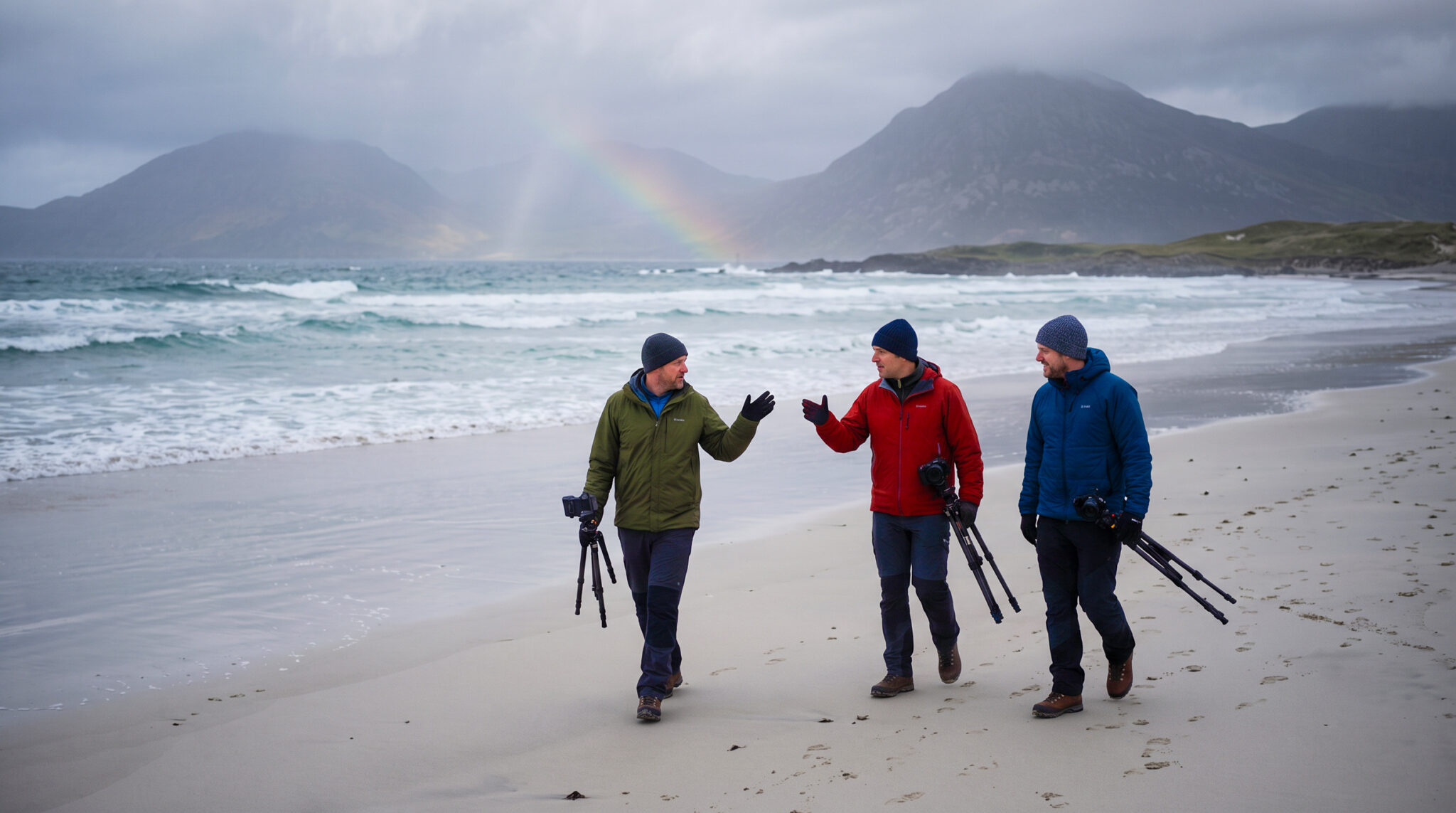
Skye, Glencoe, Harris & Lewis, Assynt, Orkney, Torridon, Shetland – all incredible locations to photograph.
We all recognise the names and immediately imagine the fantastic photographs we might make there. And we invariably do.
But simply taking somebody to a beautiful place doesn’t necessarily make it a photography workshop.
You could visit exactly the same locations yourself.
For me, the difference lies in what happens once we arrive.
A workshop should provide the time and encouragement to look properly. To consider the landscape rather than immediately reaching for the camera. To think about composition, light, viewpoint, focal length, exposure, filters and, ultimately, what it is that has made you want to photograph that particular scene.
Sometimes that means helping someone with a technical question.
Sometimes it means discussing composition.
And sometimes the most useful thing I can do is encourage somebody to slow down and spend another ten minutes simply looking.
A Place to Learn
The word workshop is important.
There should be an element of learning.
That doesn’t mean standing in the landscape delivering lectures while everybody takes notes. Landscape photography simply doesn’t work like that.
Much of the learning happens naturally.
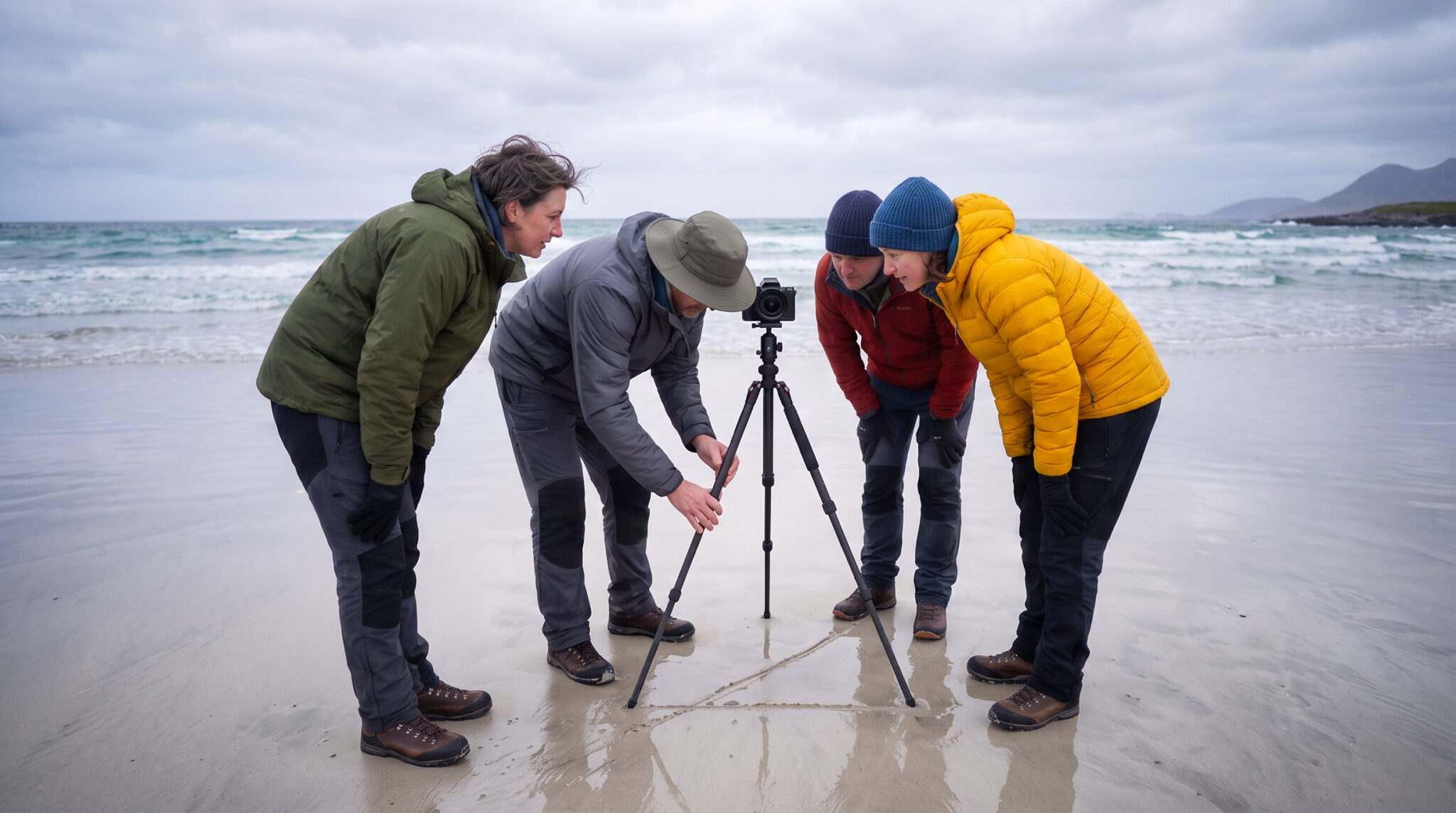
A question beside a tripod.
A conversation while looking at the back of a camera.
Moving twenty metres along a beach and suddenly discovering a completely different composition.
Trying a different shutter speed.
Waiting for the light.
Or recognising that something simply isn’t working and starting again.
These small amounts can often be more valuable than formal tuition because they are happening while the photographer is actually facing the problem.
And importantly, different photographers need different things.
Someone may have owned their camera for six months. Somebody else may have been photographing landscapes for thirty years.
A workshop should have room for both.
It Shouldn't Be About Copying The Leader
This is something I feel increasingly strongly about.
My job isn’t to create four or five versions of one of my photographs.
Of course I’ll suggest viewpoints and compositions. I’ll explain why something interests me. I’ll help when someone is struggling.
But ultimately, I want people to make their photographs, not mine.
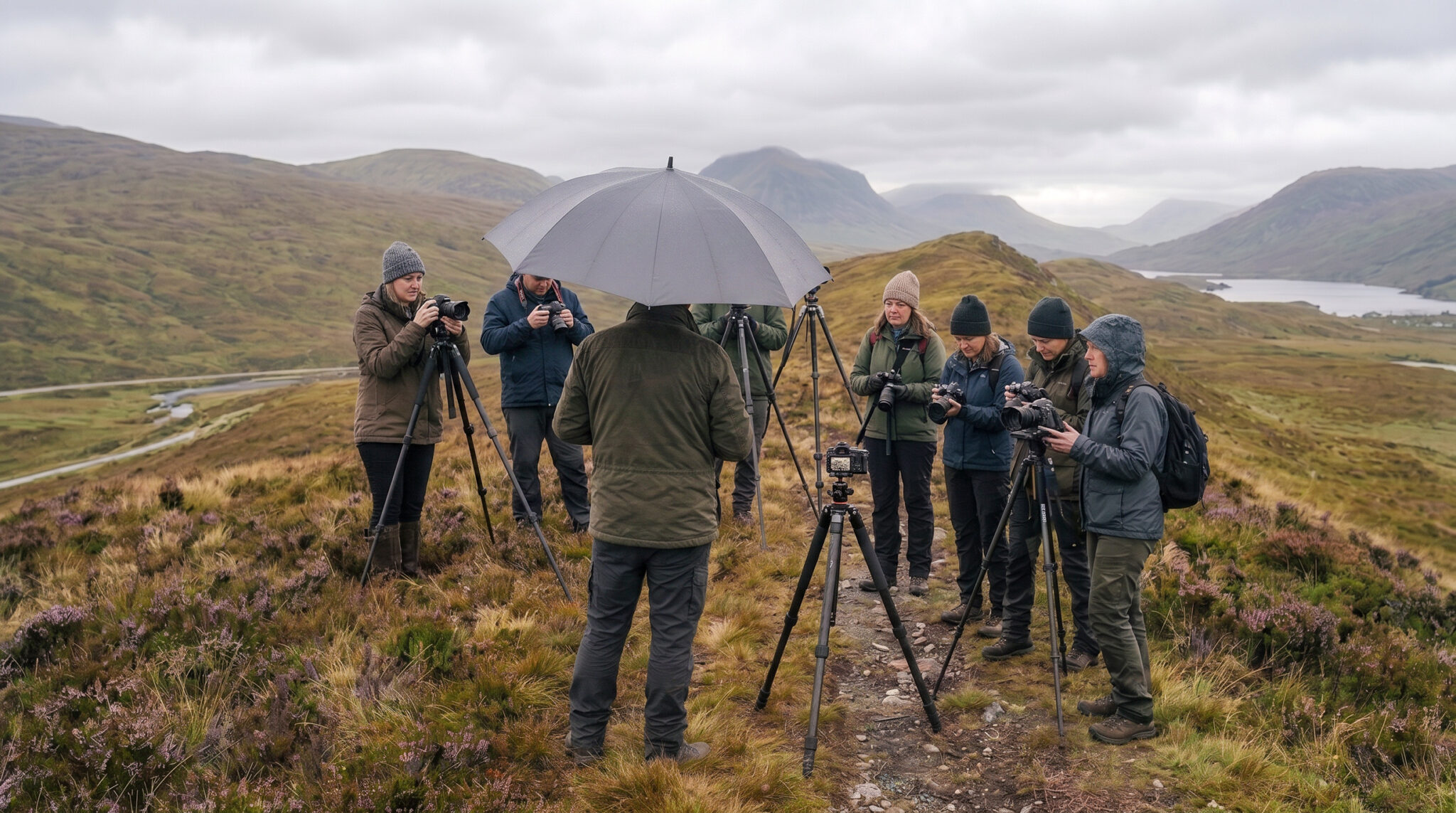
Put five photographers in exactly the same landscape and you should hopefully get five different interpretations.
One notices the mountain.
Another becomes fascinated by a small section of moving water.
Someone reaches for a wide-angle lens.
Another puts on a telephoto.
One makes a long exposure while somebody standing three metres away photographs the waves at 1/1000th of a second.
None is necessarily right or wrong.
That individuality is one of the things I love most about photography.
Time Matters
Perhaps one of the greatest luxuries a photography workshop can provide is something surprisingly simple:
TIME.
Time to stop.
Time to look.
Time to get something wrong.
And time to try again.
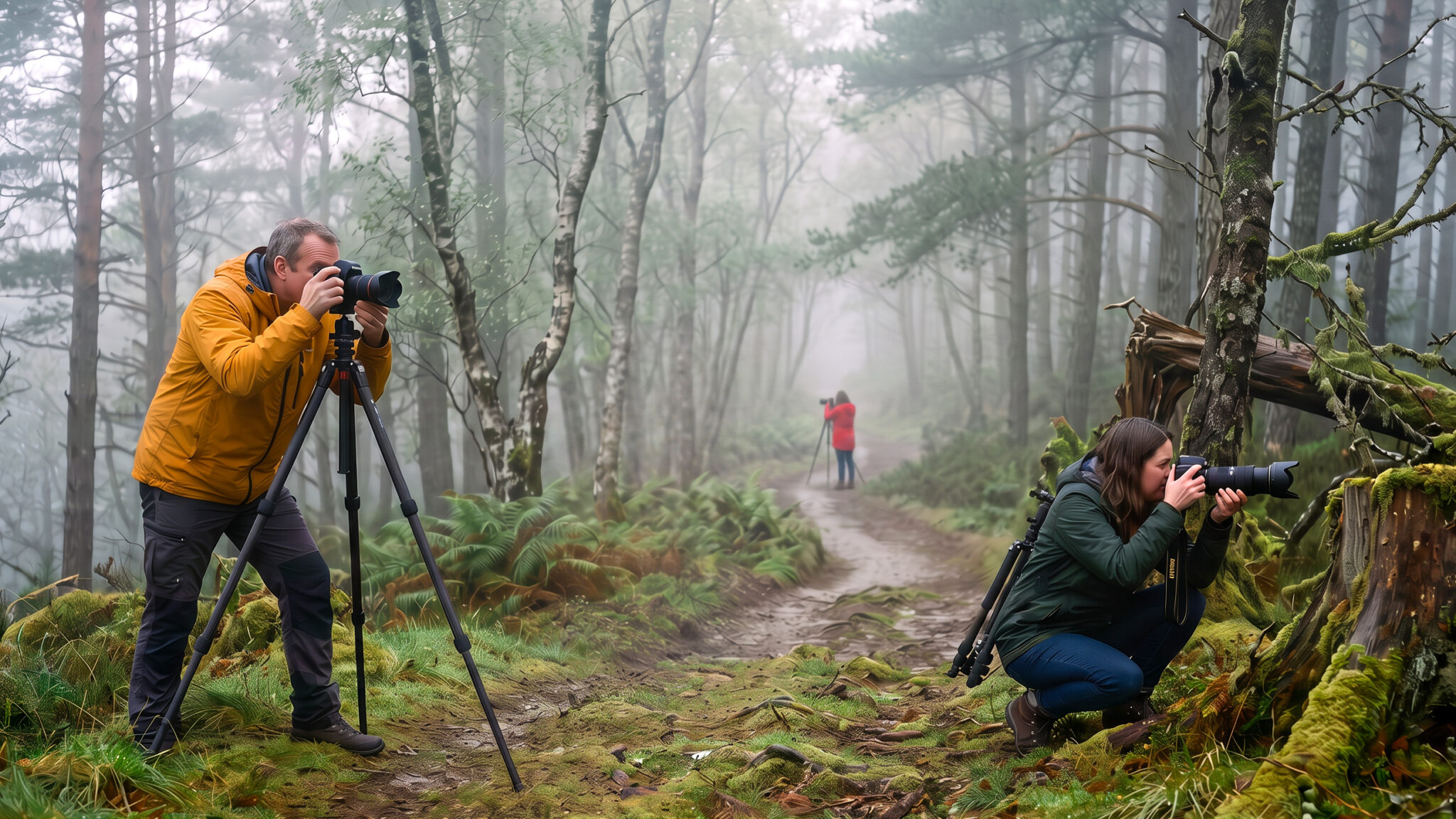
When photographing independently, it can be incredibly easy to rush. We arrive somewhere, take the obvious photograph, look at the screen and move on.
A workshop should create an environment where there isn’t always pressure to too that.
Sometimes the photograph reveals itself immediately.
Often it doesn’t.
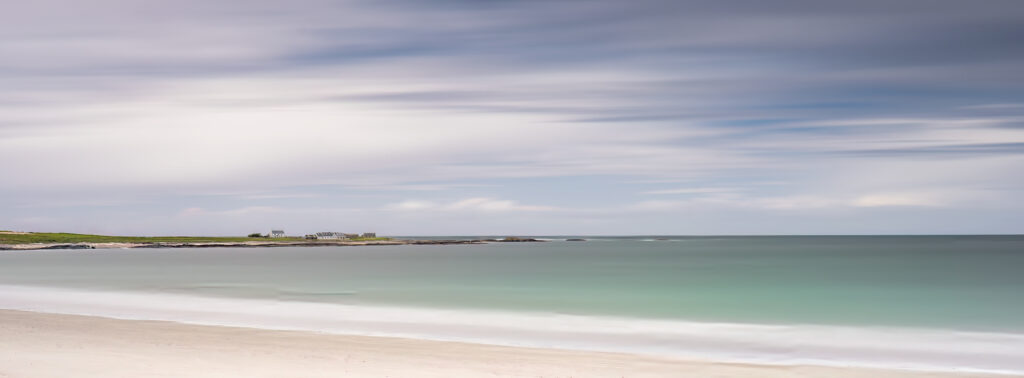
I’ve watched photographers struggle with a location for half an hour (often much longer at places like Luskentyre beach on Harris) before everything falls into place.
Not necessarily because the light dramatically changed, but because they began to understand what they are looking at.
Those moments are important.
It's Also a Shared Experience
Photography can be a surprisingly solitary activity.
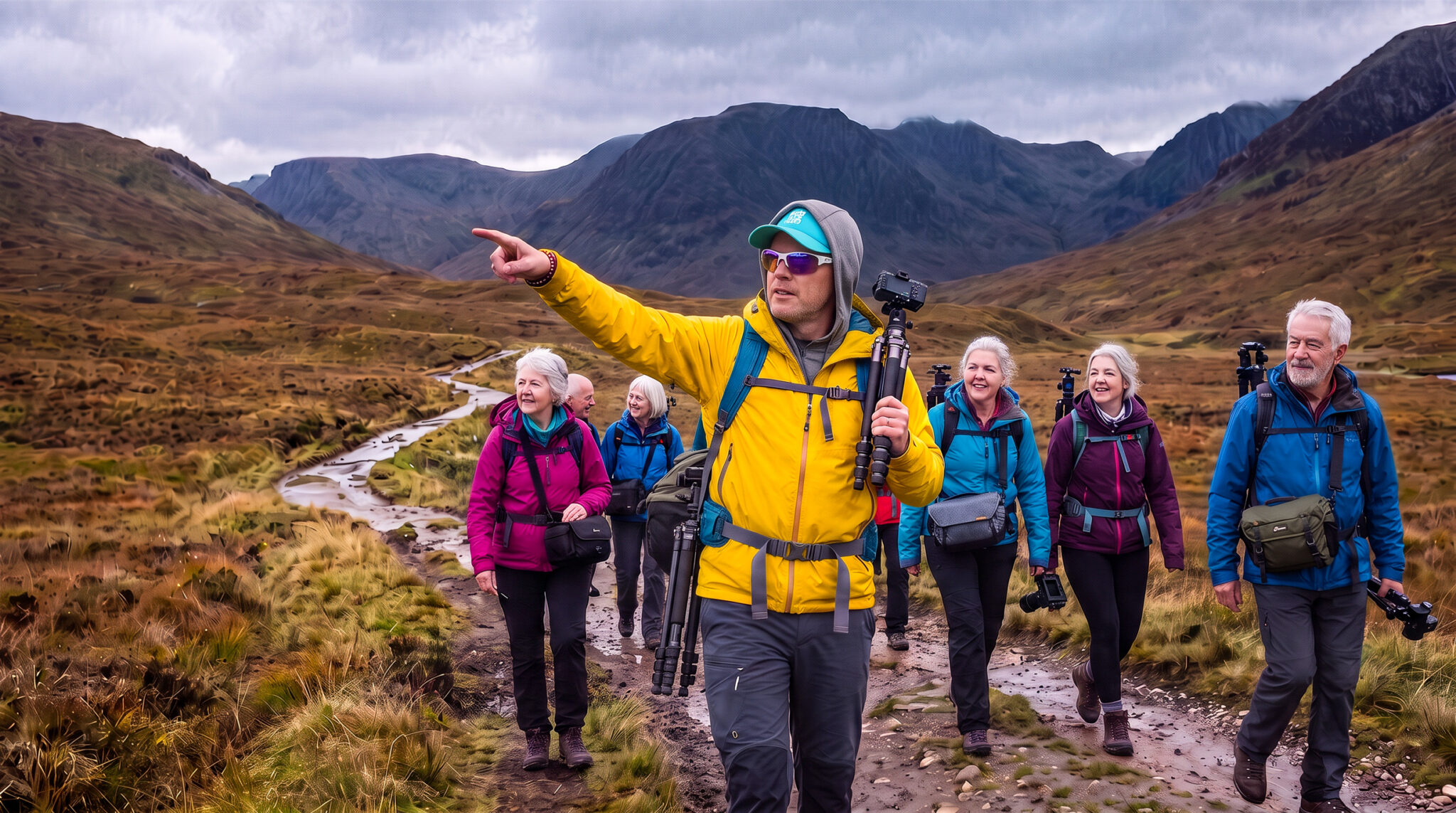
That, can be one of it’s greatest attractions, but there is something very different about spending time in the landscape alongside people who share the same enthusiasm.
Conversations happen.
Ideas are exchanged.
Friendships are created.
Someone notices something another person has completely overlooked.
OR – has noticed a piece of kit they have not seen before or have admired someone else’s camera.
There is laughter, frustration, encouragement and occasionally the collective realisation that the weather has completely different ideas from those we had planned.
And then we adapt.
The participant isn’t simply attending tuition. They’re part of an experience centred around photography.
For me, that distinction matters.
So What Should a Photography Workshop Be?
I don’t think there is a single definition.
Different photographers want different things and different workshop leaders will inevitably approach them differently.
But I do know what I believe they should provide.
A photography workshop should give everybody the opportunity to step away from everyday distractions and concentrate properly on their photography.
It should provide guidance without dictating.
Teaching without overwhelming.
Encouragement without pressure.
It should create opportunities rather than guarantee photographs.
And it should give photographers enough time and freedom to explore their own way of seeing the landscape.
Ultimately, perhaps the simplest definition is the best.
A photography workshop should help you see more, understand more and enjoy your photography more.
The photographs matter.
Of course they do.
But perhaps what you take away from a photography workshop shouldn’t only be what’s stored on your memory card.

NEXT IN THE SERIES
Why Go On a Photography Workshop?
If we can travel independently, learn almost anything online and find photographic locations at the touch of a screen, what does attending a photography workshop actually give us?