Why the Quietest Part of a Photograph May Be the Most Important
I have never particularly liked the term “negative space”
The word negative suggests something unwanted – an area of the photograph in which nothing is happening, perhaps even that something should be filled.
It can sound like an absence, a weakness or a failure to make full use of the frame.
Yet, when it is used thoughtfully, negative space can be one of the most positive and expressive elements within a photograph.
It can create calm.
It can give the subject room to breathe.
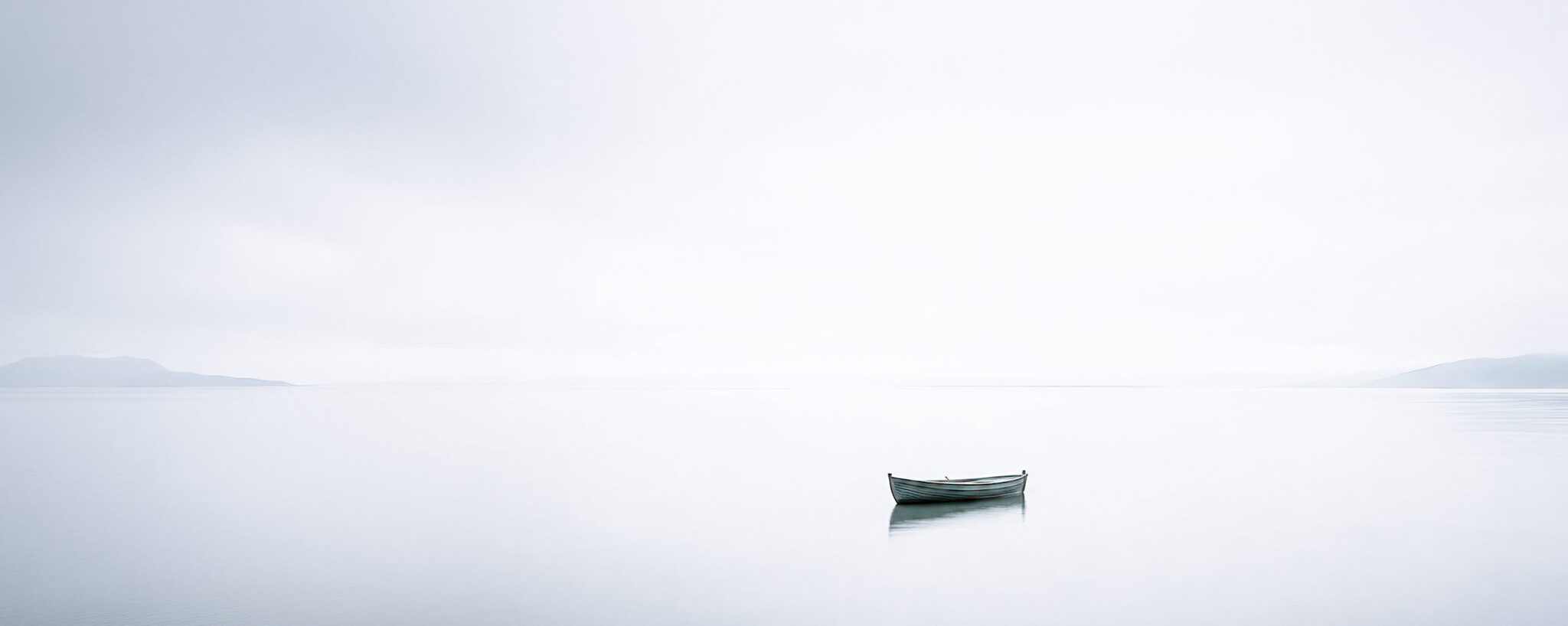
It can simplify a complicated landscape, strengthen a composition and guide the viewer towards what truly matters.
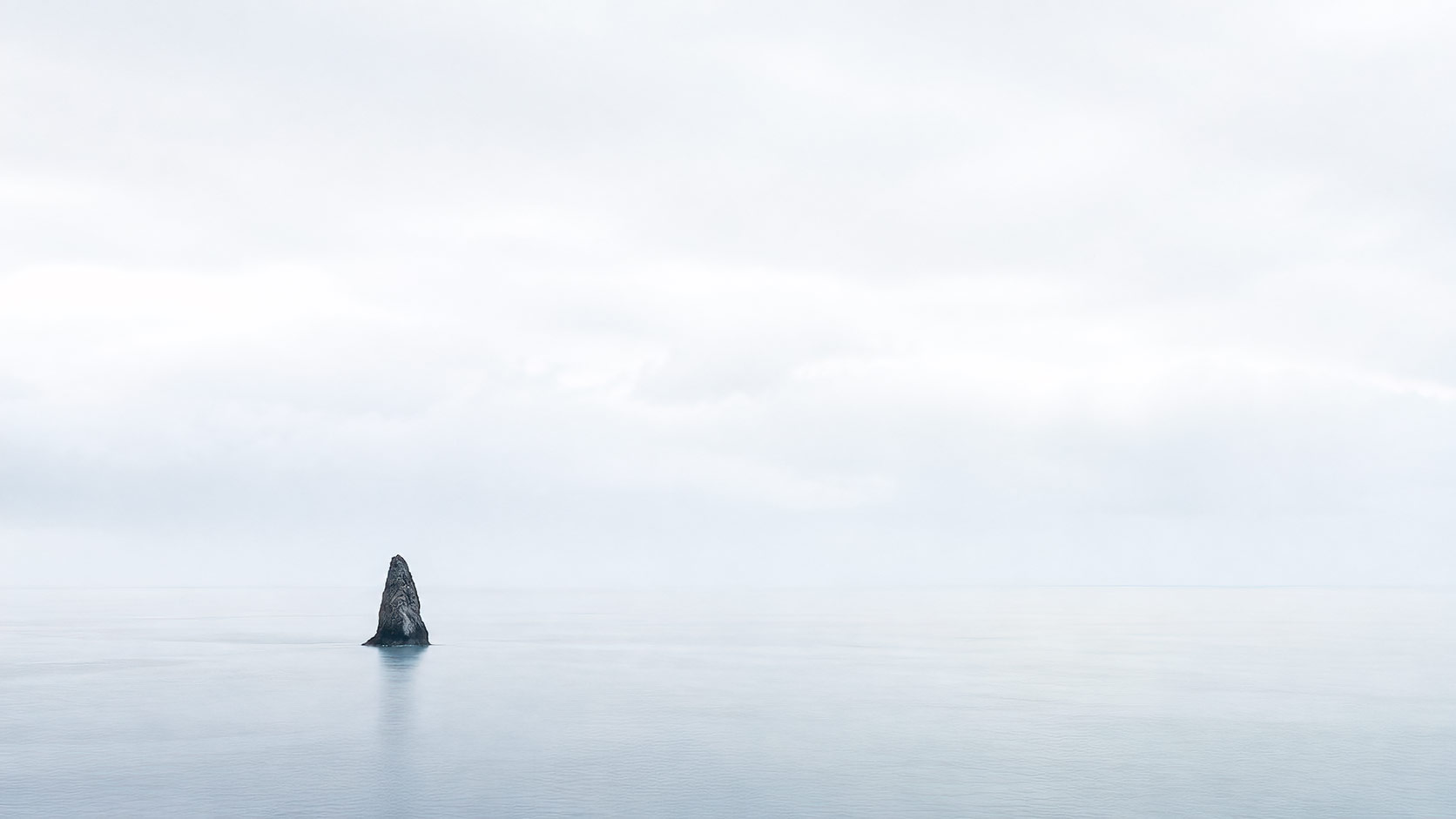
Perhaps we should think of it not as negative space, but as quiet space.
It is the stillness surrounding the subject.
The pause between the notes.
The silence that allows the important part of the photograph to be heard.

What is Negative Space
In simple terms, negative space is the relatively empty area surrounding the main subject of a photograph.
The main subject is sometimes described as the “positive space”
But that surrounding area is not necessarily empty.
A pale sky may contain subtle changes in tone.
A calm sea may carry texture and gentle movement.
Mist may hide detail while creating atmosphere.
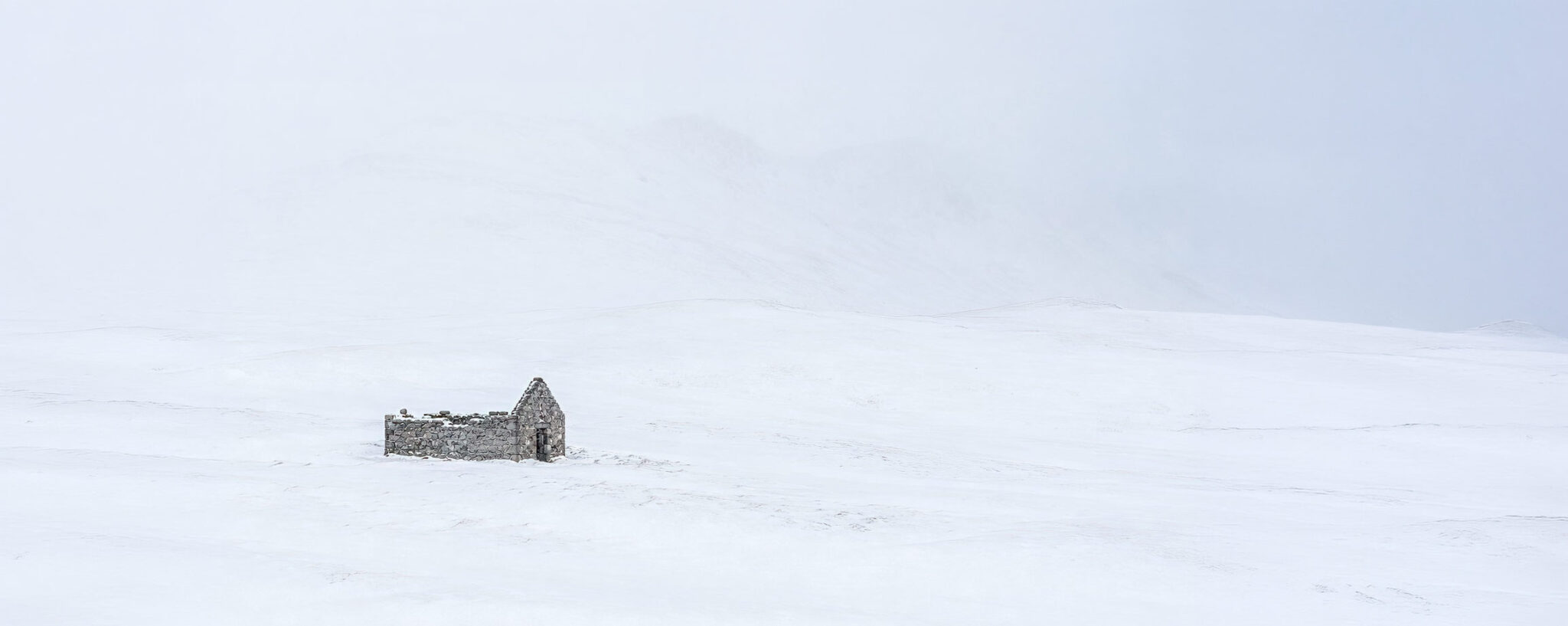
A field of snow may appear almost blank, yet contain delicate shadows or small variations of colour
The space may be visually quiet, but it is still contributing to the photograph.
In fact, it’s apparent emptiness is often what gives the subject it’s strength.
Space is Part of the Composition
When composing a landscape photograph, we naturally look for things.
We ofter ask ourselves what else we can include to make the photograph stronger.
Sometimes, however, the better question is:
What can I leave out?
Negative space encourages us to think about composition as a relationship between objects and the areas surrounding them. The empty part of the frame is not simply what remains after we have positioned the subject.
It must be considered just a s carefully as the subject itself.
Where should the subject sit within the frame?
How much space should surround it?
Should that space feel balanced, or would an uneven composition create more tension?
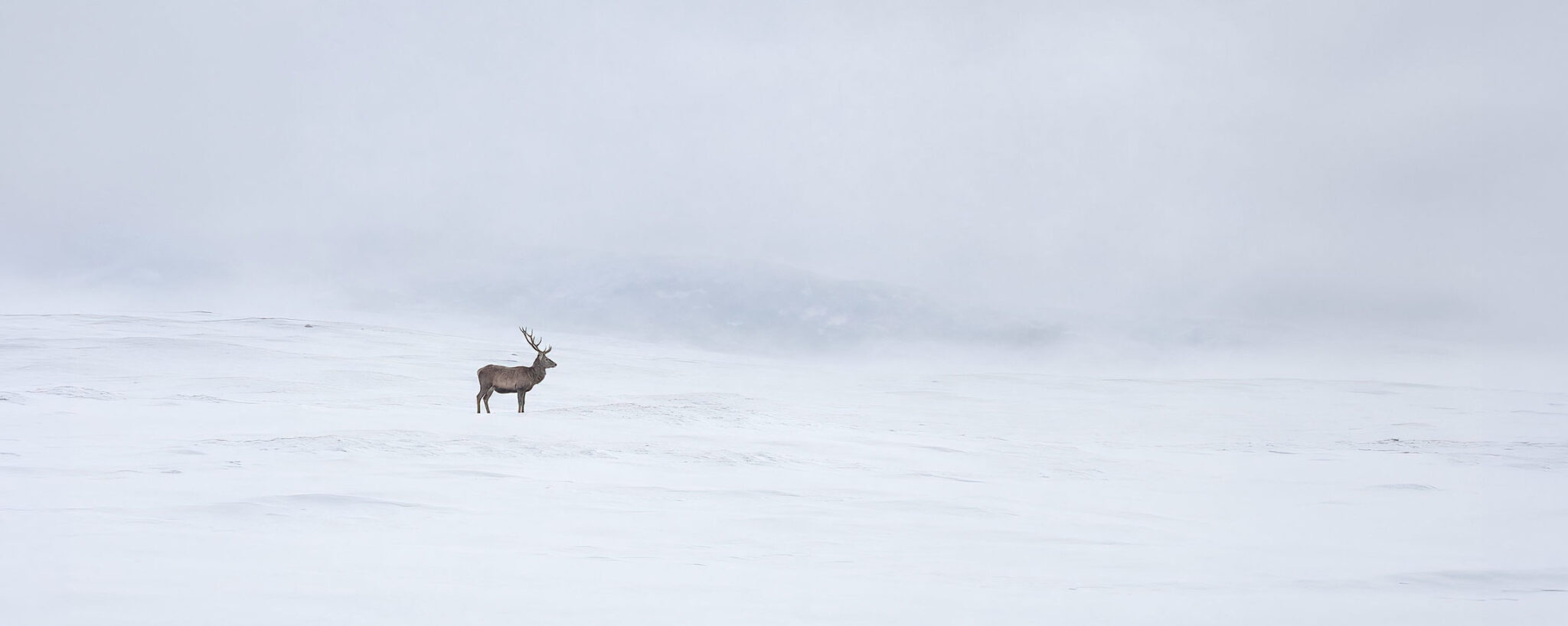
Does the subject appear to be looking or moving towards an open part of the frame?
Does the empty space contribute to the mood?
These are creative decisions rather than rules.
The essential point is that the space should feel intentional.
There is a difference between a photograph that contains empty space because the photographer did not know what else to do with it and one in which space has been deliberately used to create meaning.

The Technical Process
Negative-space photography may look simple, but simplicity requires precision.
With fewer elements in the frame, every distraction becomes more noticeable.
Begin with careful framing.
Examine all four edges of the viewfinder and study the quieter areas. Would moving slightly, lowering the tripod or changing focal length. remove distractions and better separation?
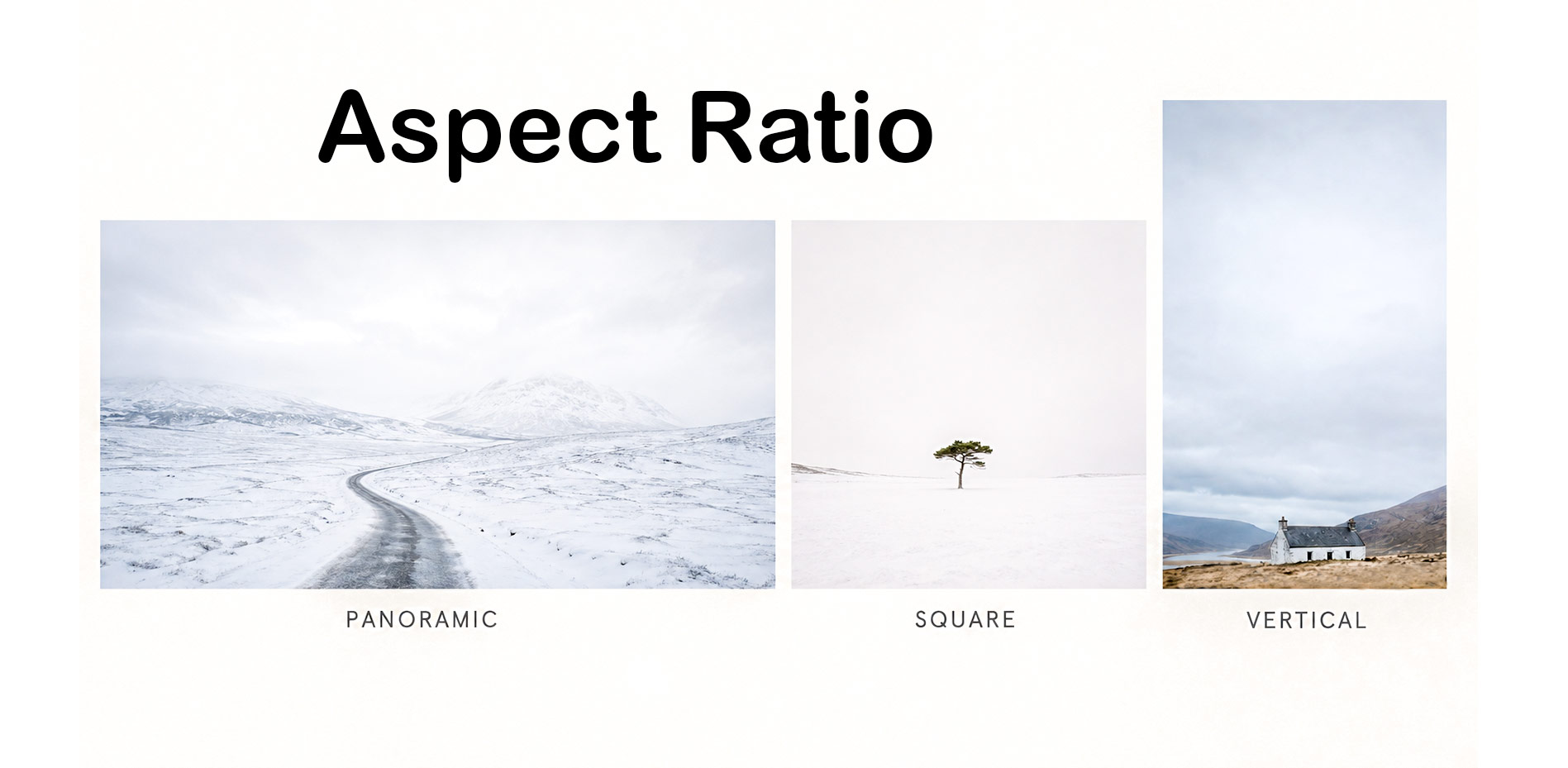
Aspect ratio is also important because the shape of the frame determines how the quiet spaces relates to the subject.
All the images in this article are in the panoramic format which can emphasise openness and isolation.
A square frame often creates stillness and balance, while a vertical format can use an expanse of sky or foreground to make the subject appear smaller and more vulnerable.
Rather than automatically accepting the camera’s native aspect ratio, consider which frame best expresses the feeling of space.
A telephoto lens is particularly useful for isolating subjects and simplifying the wider landscape.
A distant tree, cottage or shaft of light can become more powerful when separated from its surroundings.
Exposure also matters when photographing snow, mist, pale skies or bright water.
The camera may render these areas as dull or grey, so positive exposure compensation may be needed. Use the histogram to retain delicate highlight detail while preserving the photograph’s brightness.
Quiet space can also be created through darkness.
Deep shadow around a small illuminated subject produces mystery and visual concentration. Expose carefully for the highlight and allow the shadows to fall naturally towards black.
Shutter speed can further simplify a scene.
A long exposure can soften water and transform clouds into gentle bands of tone, removing unnecessary detail and allowing the main subject to emerge more clearly.

The Creative Process
Negative space does not come from one particular type of landscape or a single compositional technique. It can be found wherever detail becomes quieter and the subject is allowed to stand apart from its surroundings.
Sometimes it appears naturally through weather or light; at other times, it is created through careful framing, viewpoint or lens choice.
The following six examples demonstrate some of the most effective ways in which negative – or quiet – space can be formed: through an expansive sky, calm water, mist, snow, open land or a simple background.
Although each environment is different, the principle remains the same.
The quieter areas are not wasted or incomplete.
They give the subject greater emphasis while helping to communicate:
Calm.
Scale.
Isolation.
Atmosphere.
They provide visual breathing room and allow the viewer’s attention to settle upon what truly matters within the frame.
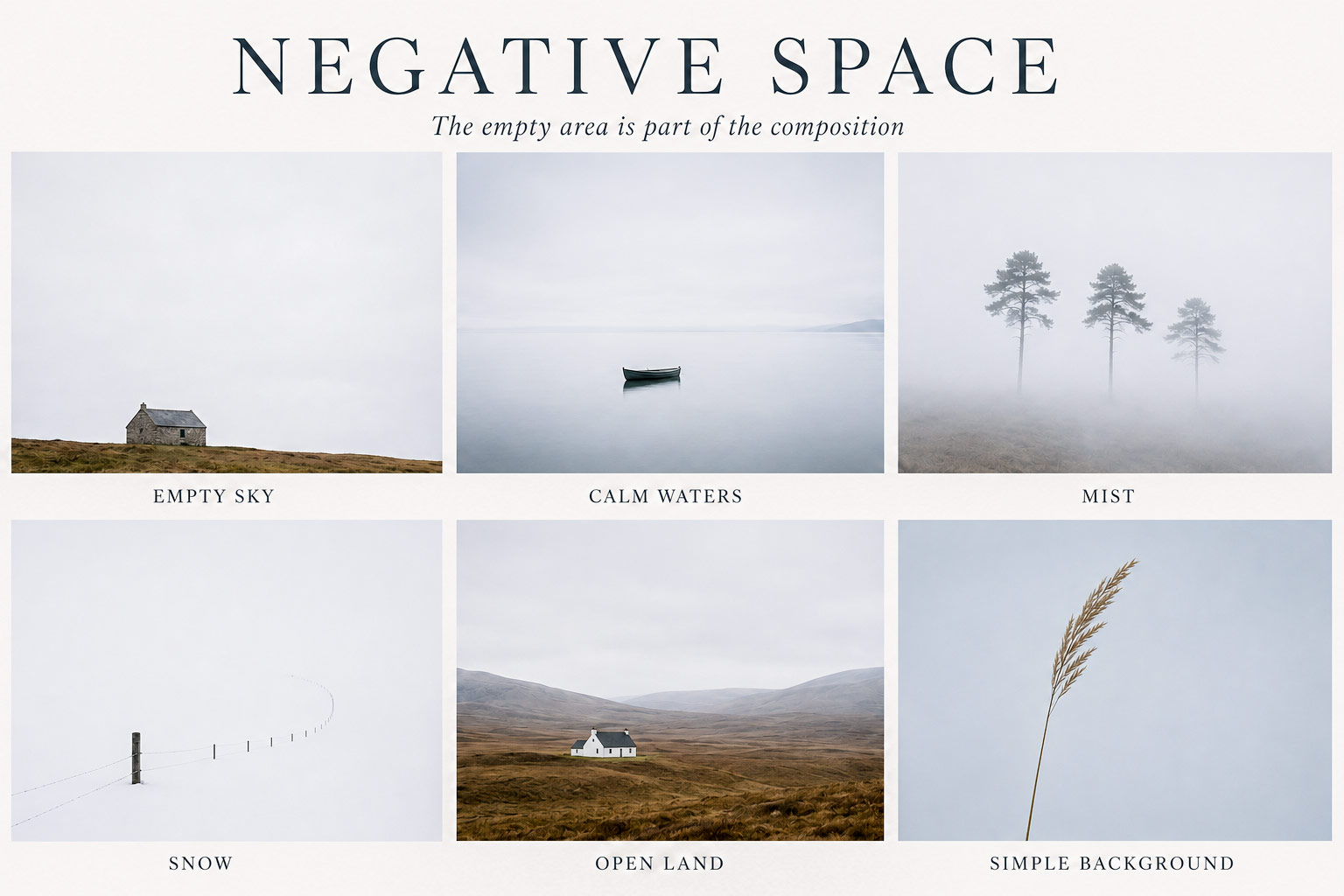
Empty Sky
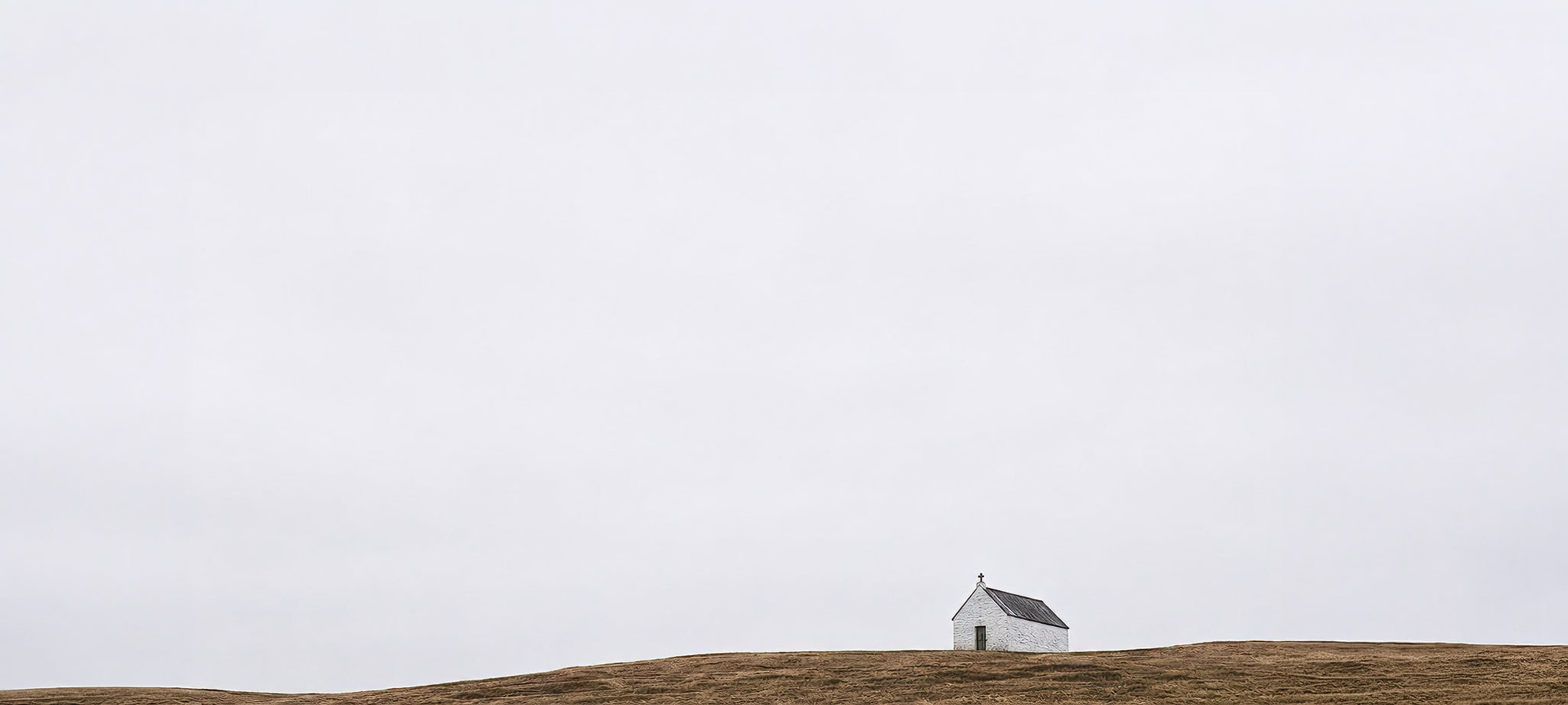
An empty sky can be one of the simplest and most effective forms of negative space.
By placing the horizon low, the sky becomes more than a background: it creates mood and gives the subject room to breathe.
Here the small tree is dwarfed by the open space above, emphasising:
Solitude.
Exposure.
Remoteness.
A busier sky would divide attention, whereas this restraint strengthens the house’s presence.
Such compositions must feel intentional.
Subtle variations in cloud, tone and light provide texture without disturbing the calm, allowing the tree to communicate vulnerability, isolation and quiet beauty.
Calm Water
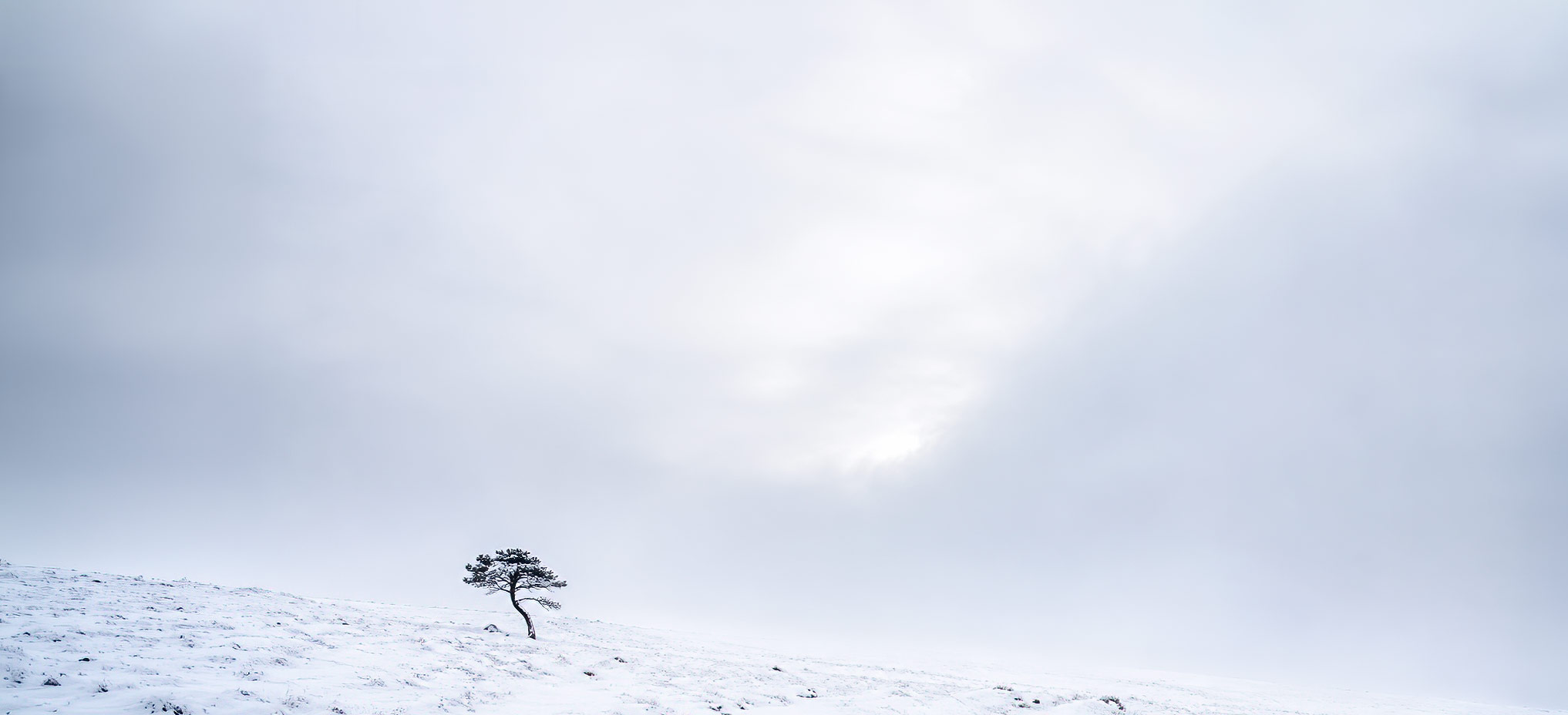
Calm water can create negative space by removing many of the distractions we normally associate with the surface of a loch or sea.
When wind and movement disappear, reflections soften, textures become restrained and the water turns into a broad field of gentle tone.
A simple subject can then hold our attention without needing to dominate the frame.
In the image below, the boat is surrounded by stillness.
Its dark shape provides a clear point of contrast against the pale water, while the generous space around creates separation.
We notice the boat immediately, yet the emptiness is equally important.
It communicates silence, calm and perhaps a sense of being alone.
The horizon and distant land have deliberately been allowed to fade rather than compete with the subject. The image becomes less about describing the place and more about expressing a feeling.
When photographing calm waters, it is worth resisting the temptation to fill the foreground.
A slight ripple, tonal transition or reflection may be all that is needed to give the photograph depth while preserving its essential sense of tranquility.
Mist
Mist naturally creates negative space.
It conceals detail rather than physically moving it. Trees, hills and buildings may still be present, but their edges soften and their surroundings gradually disappear.
The landscape becomes simpler, allowing the photographer to decide which elements should remain visible and which can be left to the imagination.
Mist also changes the emotional character of negative space. An empty blue sky may feel open and optimistic, whereas mist can suggest mystery, silence or uncertainty.
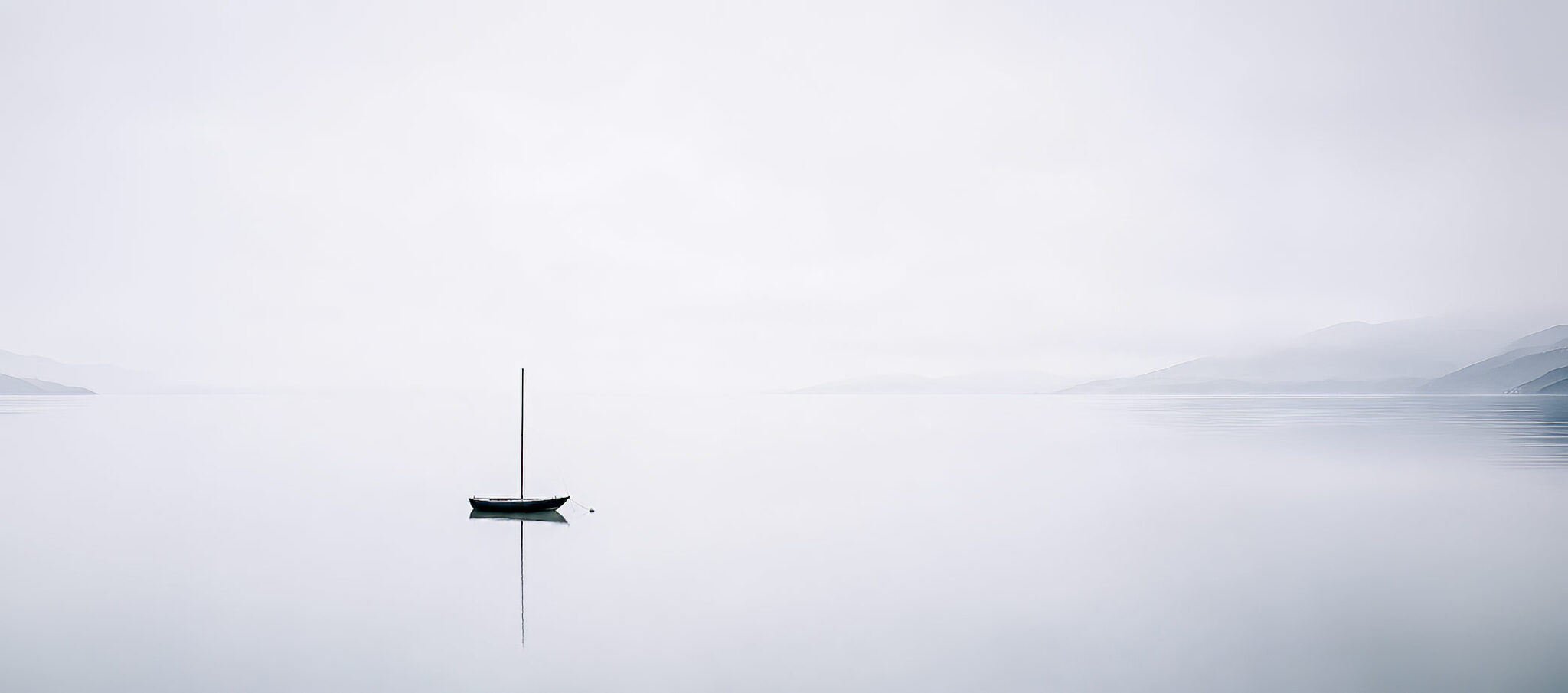
In the photograph below, the three trees emerge from a pale almost featureless environment.
Their differing strengths are important: the nearest tree carries the greatest contrast, while the others become progressively quieter.
This creates depth without introducing clutter. The empty mist around them provides separation and prevents their branches from becoming tangled with a busy background.
Snow
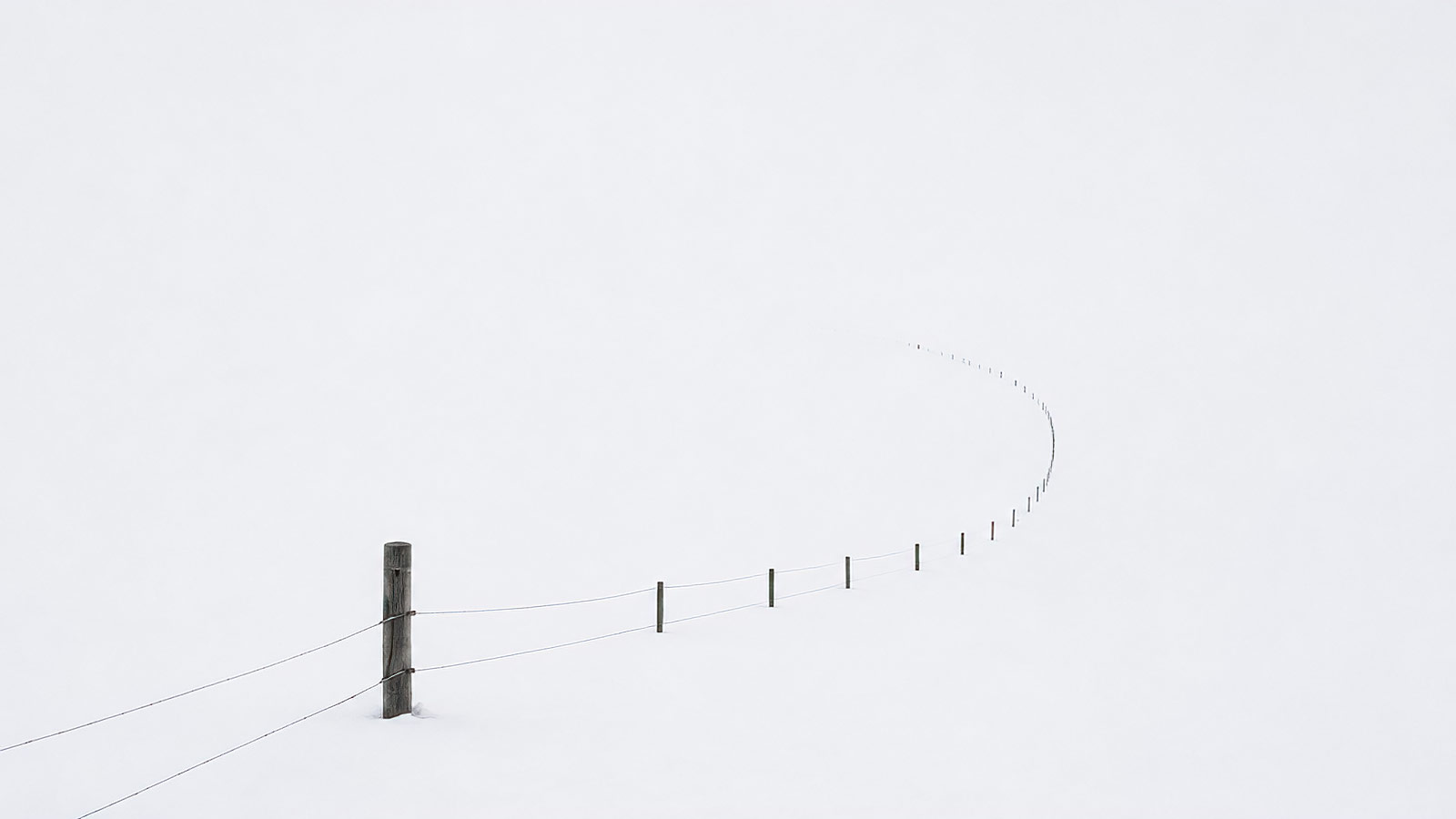
Snow is a wonderful simplifier. It covers grasses, stones and uneven ground, turning a complicated landscape into a nearly continuous field of white. This allows familiar objects to be seen as lines, shapes and intervals rather than merely as things within a scene.
Negative space appears naturally because so much visual information has been removed.
In this image, the fence begins with a strong foreground post and then curves away into the distance. The surrounding snow is almost empty, but it is not without purpose.
It gives the fence room to describe its journey through the frame and makes each diminishing post easier to recognise.
The open whiteness also creates a sense of silence and isolation.
Open Land
Open land offers a different form of negative space.
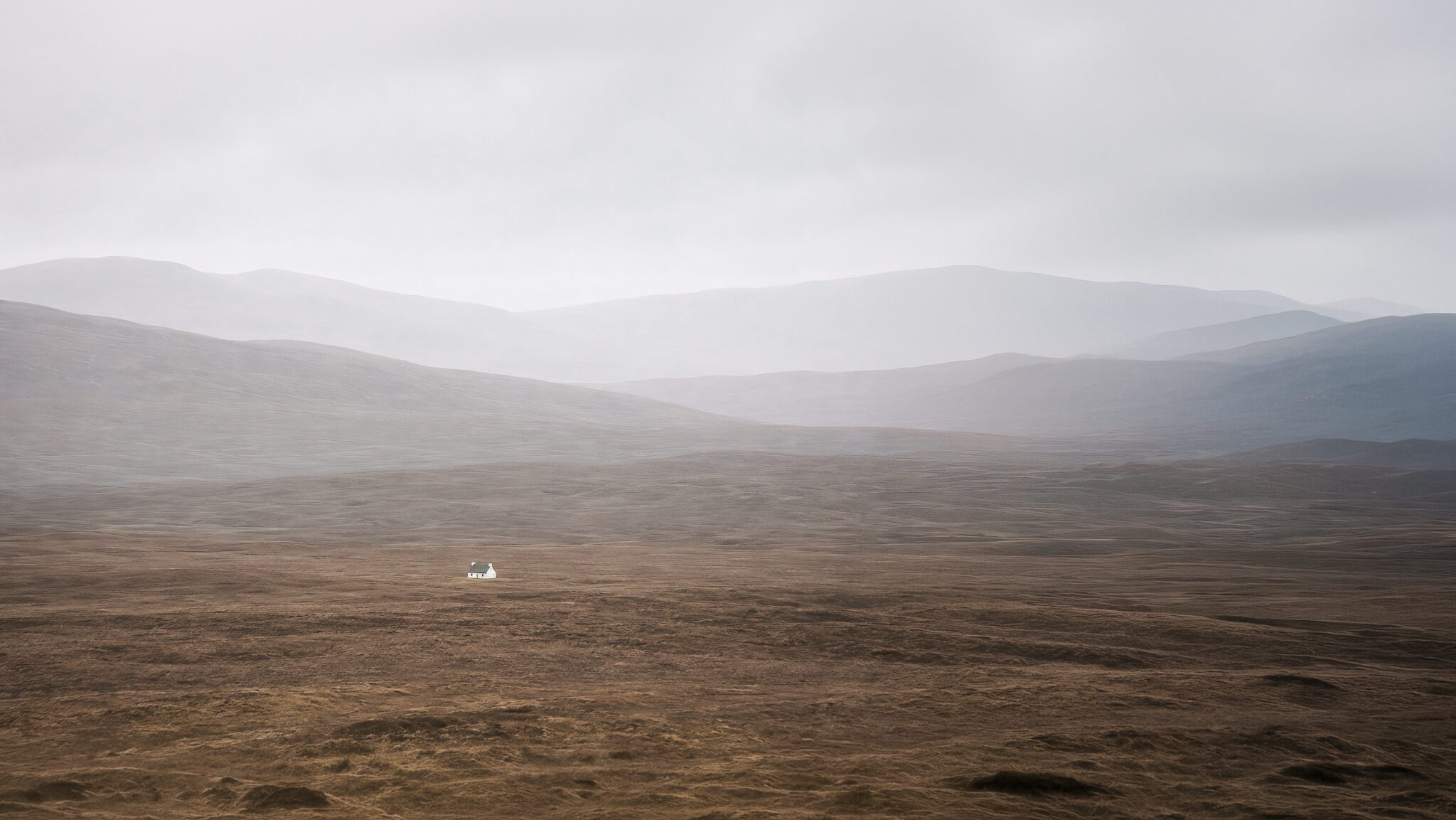
Although it contains grasses, contours and subtle changes of colour, quiet and repetitive detail can create a broad visual field against which a small subject becomes powerful.
Here, the White House sits within moorland and layered hills. Restrained earth tones help it stand apart, while its small scale communicates the breadth and remoteness of the landscape.
This works particularly well in the Scottish Highlands, where distance and isolation are central to the experience of the place.
Rather than moving closer, keeping the subject small can tell a richer story about its relationship with the environment.
Placement and separation from strong lines, tonal changes and frame edges remain essential. Once balanced, the open land provides context, atmosphere and scale, expressing what it might feel like to live within such a vast, quiet landscape.
A Simple Background
A simple background is one of the clearest ways to reveal the character of a small object.
When competing detail is removed, the viewer begins to notice shape, texture and direction. The background may contain colour and tone, but it remains visually quiet enough to support the subject without demanding attention for itself.
Here, in this image, a single dried grass stem is isolated against a soft blue-grey background. Its fine structure and warm colour become immediately apparent because nothing overlaps it.
The generous space around the stem also gives its slight curve and upward movement greater importance. What might easily be overlooked within a busy field becomes elegant and expressive.

Space Creates Emotion
One of the greatest strengths of negative space is its ability to create emotion.
A tiny figure beneath a vast sky may suggest solitude. A small boat surrounded by open water can communicate distance and isolation, while a lone building on an empty moor may evoke resilience or belonging.
The size of the subject in relation to the surrounding space becomes part of the story.
Make the subject larger and we describe the subject itself.
Make it smaller and we begin to describe its place within the world.
This distinction matters in landscape photography. We are simply showing what mountains, trees or buildings look like, we are expressing how it feels to stand among them.
Space communicates scale, but it can also suggest silence. Many landscapes attract us because of what is absent – traffic, crowds and constant interruption.
That emptiness is part of the experience.
Fill every part of the frame and we may lose the quality that first drew us there.
Learning to Trust the Empty Spaces
It can take confidence to leave a large part of the photograph apparently empty.
We may worry that the image is too simple or that the viewer will think we have failed to include enough.
The temptation is to add another rock, another line or another area of interest.
But a photograph does not have to keep the eye permanently busy.
Sometimes it can invite the eye to rest.
When working in the landscape, try making two compositions.
Begin with the more obvious view – the wider scene containing all the elements that first attracted you.
Then make a second photograph in which you deliberately simplify.
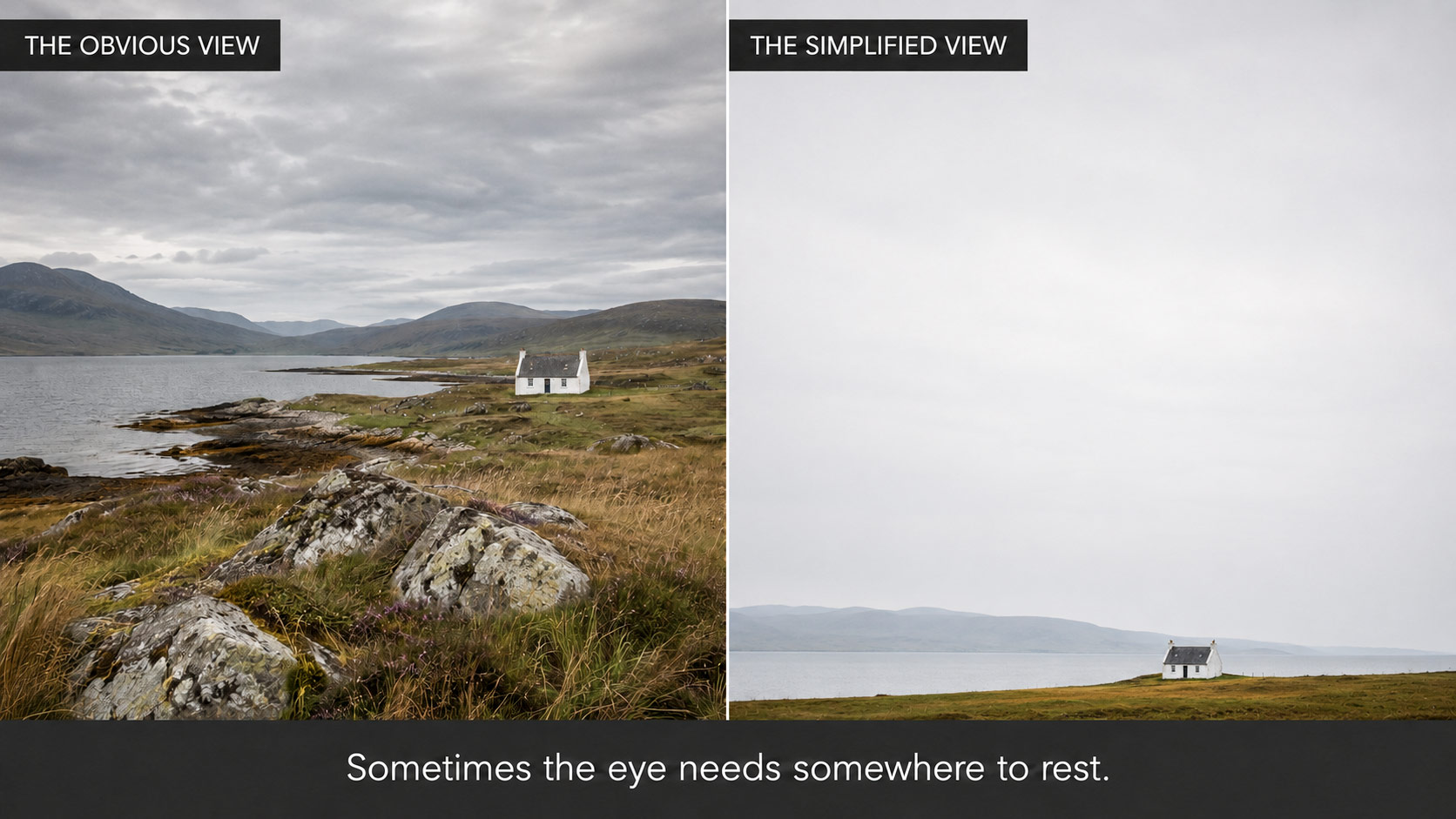
Move closer or use a longer lens.
Reduce the number of competing elements.
Allow more sky, water, mist or shadow into the frame. Make the subject smaller and see whether the photograph becomes weaker or, perhaps, stronger.
Ask yourself whether every object is helping the story.
If it is not, consider removing it.
This is not about following a minimalist fashion or forcing every landscape into the same style.
It is about developing an awareness to recognise when space can say more than detail.
A Positive Presence
Perhaps negative space is poorly named because it is not negative at all.
It is active.
It controls visual balance.
It strengthens the subject.
It establishes mood.
It determines the pace at which we read the photograph.
It can create a sense of scale, offer emotional breathing room and transform an ordinary subject into something quietly powerful.
More importantly, it teaches us that a successful photograph is not measured by how much we manage to include.
It is measured by how clearly we communicate what matters.
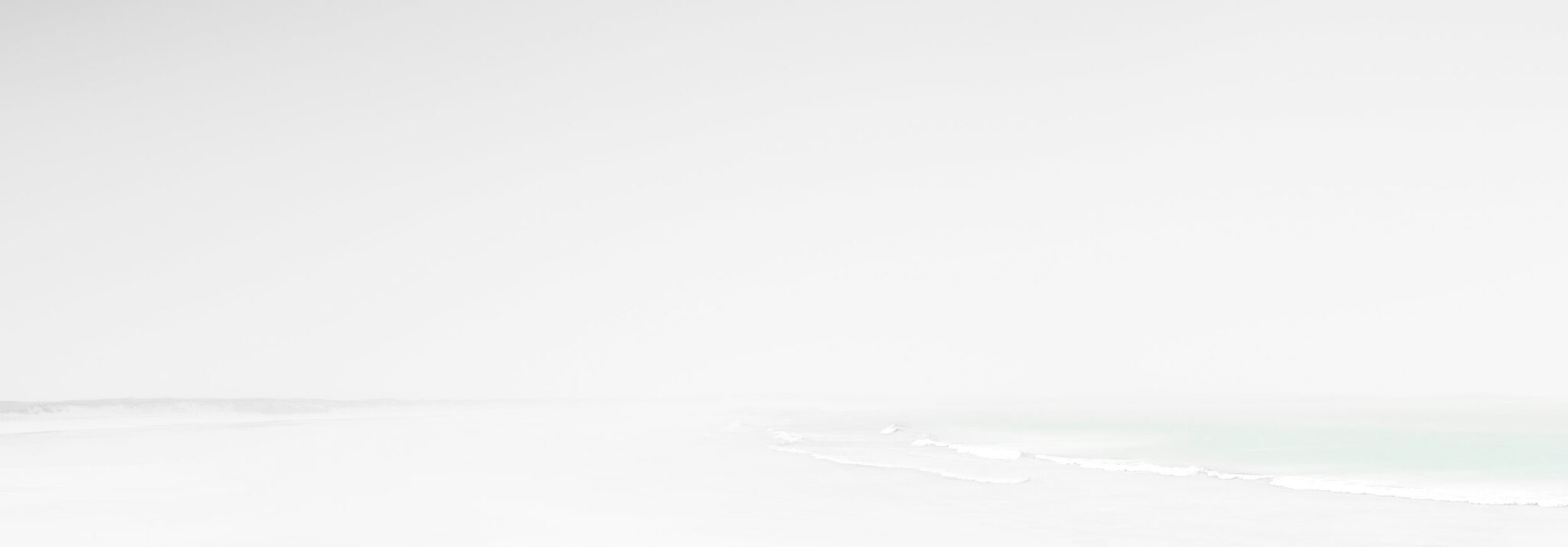
The next time you are standing before a landscape, do not look only at the mountain, the tree, the lighthouse or the distant figure.
Look at the air around it.
Look at the sky above it.
Look at the quiet stretch of water, snow, mist or shadow that allows it to exist within the frame.
The space is not waiting to be filled.
It already has a purpose.
And sometimes, the quietest part of a photograph is where its strongest voice can be found.