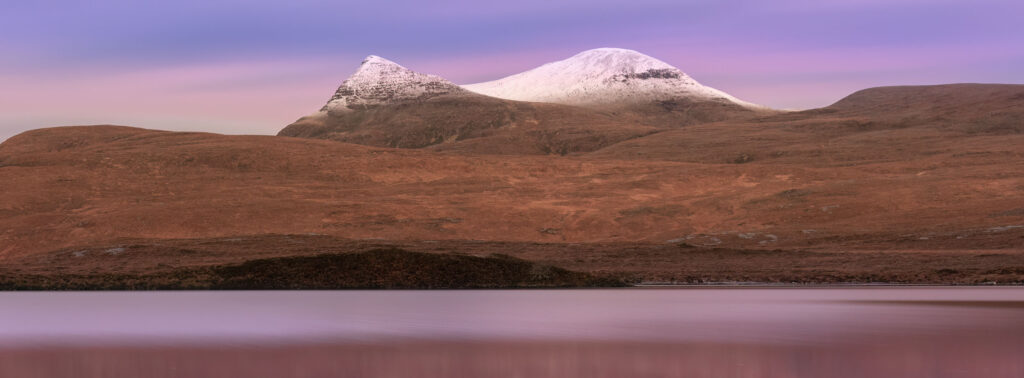
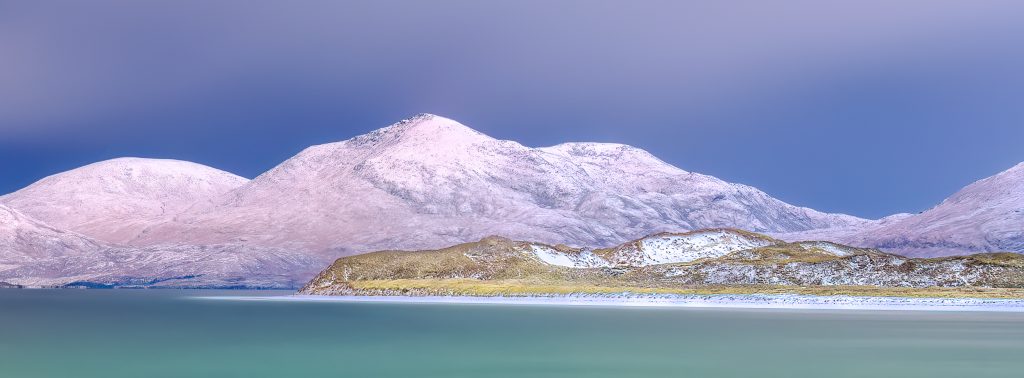
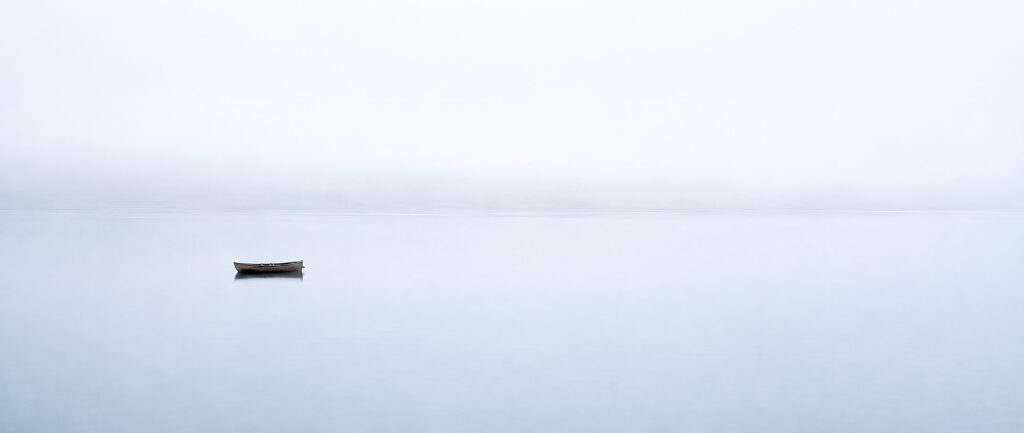
What happened when I put six of my landscape photographs in front of an artificial camera-club judge?
I recently decided to conduct a little experiment.
Like many photographers, I’ve watched artificial intelligence move increasingly into the photographic world. Much of the conversation has understandably centred around AI-generated images and the increasingly blurred distinction between photography and image creation.
But I wanted to try something rather different.
I wasn’t interested in asking AI to make a photograph for me.
I wanted to know what it thought about photographs I’d already made.
Would it simply tell me what I wanted to hear? Would the criticism be generic? Would it notice the same things an experienced human judge might pick up on? And perhaps most interestingly, would it recognise anything about my photographic style?
More specifically, I wondered what would happen if I asked AI to behave like an experienced camera-club competition judge and critique six landscape photographs from my new series of articles – “ONE PHOTOGRAPH”.
This was the brief:
“Please judge this photograph as an experienced camera- club competition judge seeing it for the first time.
Assess its impact, composition, light, tonality, technical quality, originality and atmosphere.
Highlight its strengths, but be critical about anything preventing a top score, including distractions, composition or processing.
Give a brief competition-night critique, a realistic score out of 20, and explain what would prevent it achieving a 19 or 20 and how it could be improved”.
I didn’t provide the AI with titles, locations, technical information or any of the stories behind the photographs. It saw only the images. The titles shown here have been added afterwards for the article.
And then I waited to see what happened.
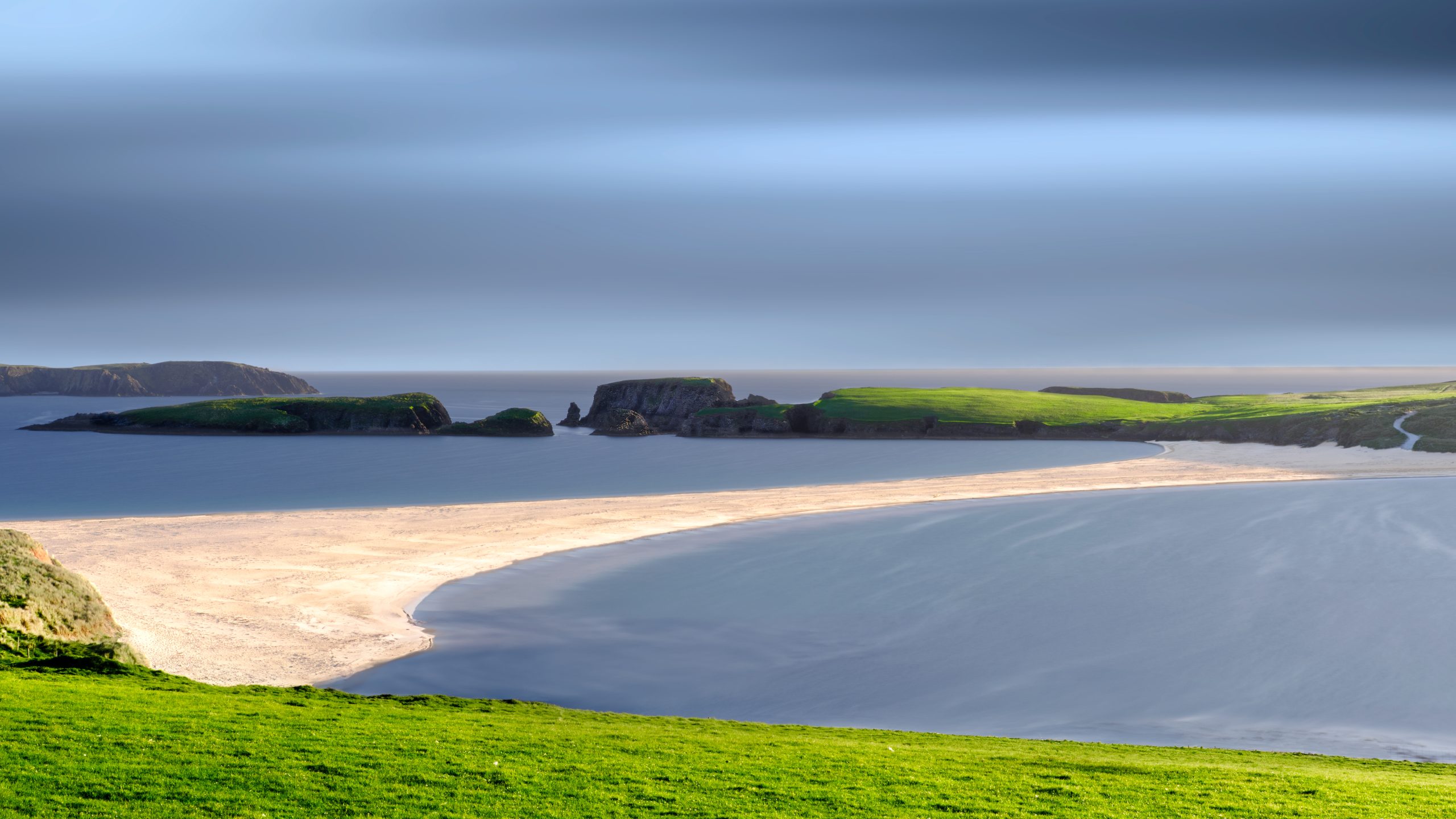
Image 1: This is a strong competition image, and one I think would do well with an experienced landscape judge. Its greatest asset is that it doesn’t rely on spectacular drama; it succeeds through shape, restraint, light and a very assured panoramic composition.
The AI Camera-Club Judge's Critique
“This is a beautifully controlled panoramic landscape with a wonderful sense of space and tranquillity. The sweeping shoreline creates an elegant lead through the frame, while the darker rock formations provide an important anchor on the left. I particularly enjoy that lovely passage of light across the green headland, which gives us a natural focal point without overwhelming the quieter character of the scene.
The photographer has handled the long exposure extremely well, simplifying the water while retaining enough tonal variation to prevent it becoming empty. The panoramic format is very well chosen and the generous sky contributes significantly to the sense of scale.
My only reservations concern the rather cool overall colour balance and the brightness towards the extreme right of the sky, which occasionally pulls my eye away from the stronger central-left area. I might also question whether some of the foreground water has become just a fraction too smooth.
Nevertheless, this is an elegant, restrained and very accomplished landscape photograph that rewards looking rather than simply relying upon immediate drama.”
AI Score: 18/20
“I think 18 is realistic, and with the right judge I could certainly imagine it being held back for consideration at the end of a competition.
What keeps me from 19 or 20 is not a major fault. At that level, photographs are often separated by extremely small things. Here I would question three things: the slightly pervasive blue/cyan cast, the pull of the bright upper-right area, and whether the large smooth foreground is quite as visually compelling as the beautifully structured middle distance.
I would not radically change the composition. I’d make very subtle adjustments: fractionally neutralise the cyan/blue bias, gently contain the luminosity of the far-right sky, and perhaps introduce just a little more tonal separation into the foreground water. I’d be extremely cautious, though. Too much additional contrast would destroy one of the photograph’s greatest qualities.
For me this is award/commended standard and potentially a winner in the right competition. It has something that many technically excellent competition landscapes lack: restraint”.
Image 2: This is a very different proposition from the previous image. It is bolder, more graphic and more immediately impactful, and I suspect it could perform extremely well in a camera-club competition. But there are also a couple of things a judge may latch onto.

The AI Camera-Club Judge's Critique
“This is a beautifully restrained landscape with tremendous graphic simplicity. I particularly enjoy the relationship between the dark landform, that narrow turquoise band of water and the expansive foreground. The photographer has been confident enough to leave considerable areas of negative space, and I think that gives the image much of its quiet atmosphere.
The long exposure is particularly successful in the sky, where the horizontal movement of the clouds complements the panoramic composition beautifully. The dark land provides a very strong anchor without requiring excessive detail.
I do have a slight reservation about the colour treatment. The blues and cyans are quite pronounced, while the foreground becomes noticeably warm, particularly along the lower edge. I find that warmer strip just beginning to attract my eye away from the principal subject.
But this is a very accomplished photograph. It is simple without being empty, graphic without becoming sterile, and demonstrates considerable confidence in composition.”
AI Score: 18/20 — pushing towards 19
“I’d put this at a strong 18, and I think it has a realistic chance of receiving 19 from some judges.
Interestingly, I think this has greater immediate competition impact than the previous panoramic image you showed me.
What stops me confidently giving it 19 is principally the processing rather than the composition. I’d want to see the full-resolution file and determine whether the colour relationships — particularly that cyan water and warm lower foreground — feel completely believable.
For a 20, I’d want essentially nothing pulling me out of the experience. At present, my eye occasionally notices the colour treatment as treatment. That’s a very small distinction, but at 19–20 level small distinctions matter.
What I would change
Very little.
I’d slightly reduce the orange/yellow saturation along the extreme bottom edge, perhaps subtly reduce the cyan saturation in the water, and check whether the sky’s blue needs pulling back a fraction.
I would not brighten the land significantly, add contrast to the sky, increase clarity, or crop heavily. All four would risk making it more conventional.
And I wouldn’t automatically remove foreground simply because there’s “too much empty space.” In this photograph, the empty space is doing something.
For me this is firmly award-standard, with potential to win a club landscape competition. Of the two photographs you’ve just shown me, I’d enter this one first if the objective were purely competition success”.
Image 3: This one would make me stop as a judge. Of the three images you’ve shown me in this sequence, I think this has the strongest emotional impact. It feels less concerned with describing a landscape and more concerned with creating a mood.
I would score it 19/20, with a couple of quite specific reservations preventing me going straight to 20.

The AI Camera-Club Judge's Critique
“This is a wonderfully atmospheric and beautifully controlled landscape. My eye is immediately drawn to that slender ribbon of water cascading through the dark foreground rocks and into the luminous pool beneath. From there I’m taken backwards through the beautifully rendered movement of the sea before eventually discovering those wonderfully understated mountains emerging from the mist.
The photographer has shown considerable restraint in allowing large areas of the image to remain genuinely dark. I particularly enjoy the layering within the picture and the gradual reduction in definition as we move towards the background, which creates tremendous depth and atmosphere.
If I have one reservation, it’s that the waterfall and particularly the pool beneath it are perhaps just a little too luminous relative to their surroundings. I become slightly aware of the processing there, whereas elsewhere the tonal treatment feels extremely natural and understated.
But this is an accomplished, individual and highly atmospheric photograph which rewards repeated viewing. A very strong image indeed.”
AI Score: 19/20
“I think 19 is justified.
And I would put this above the previous two photographs in terms of competition potential.
The reason I wouldn’t immediately award 20 is very specific: I can see where the photographer wants me to look just a little too clearly. The luminosity of the waterfall and pool feels perhaps 5–10% stronger than it needs to be.
For a 20, I’d want that guidance to become almost invisible.
I would therefore make only tiny changes: reduce the brightness of the pool slightly, perhaps very subtly reduce the central luminosity of the waterfall, and leave almost everything else alone.
I certainly wouldn’t lift the mountains, open the foreground shadows significantly, increase overall contrast or add clarity to the sea. Those would make it more conventionally impressive but, in my view, less successful.
There is also a useful competition lesson here. The previous beach panorama was beautifully minimal and graphically accomplished. This has something more difficult to manufacture: mystery. A judge sees the waterfall immediately but then continues discovering the photograph.
For me, this is firmly potential winner territory.”
Image 4: This is a fascinating competition image because it is far quieter than the previous photograph, yet I think it is potentially just as sophisticated. It depends heavily on whether the judge responds to restraint, atmosphere and negative space rather than conventional impact.
My starting point would be 18/20, with 19 quite possible. I wouldn’t give it 20 in its present form, and the reasons are fairly specific.

The AI Camera-Club Judge's Critique
“This is an extremely atmospheric and beautifully restrained panoramic landscape. The photographer has made a brave decision to allow that enormous storm-filled sky to dominate the composition, and for me that is absolutely the right decision.
I particularly enjoy the tiny passage of luminosity beneath the cloud towards the centre. It provides a subtle focal point and gives the distant landscape just enough presence without competing with the extraordinary sense of space.
The gentle sweep of the shoreline leads us beautifully through the frame, while that delicate turquoise water provides a lovely colour counterpoint to the predominantly neutral landscape.
I do have a slight reservation about the colour relationship. The cyan-green water feels perhaps fractionally strong against the otherwise restrained palette, and I find some of the small dark details towards the left-hand beach beginning to attract my attention.
Nevertheless, this is a beautifully observed landscape. It doesn’t rely upon an obvious subject or spectacular light for its success; it is fundamentally a photograph about weather, space and atmosphere, and I think it communicates those qualities extremely well.”
AI Score: 18/20
“I’d call it a high 18 rather than a borderline 18. With a judge particularly receptive to quieter landscape photography, 19 would be entirely believable.
What prevents 19–20?
For 19, I’d want the colour treatment to become just a little less noticeable. I’d reduce the cyan/green intensity of the water perhaps 5–10%, examine the central bright area to ensure it hasn’t been locally emphasised too strongly, and consider toning down—not necessarily cloning—the handful of dark specks on the left-hand beach.
For 20, there’s a different issue.
I don’t think you can process this into a 20.
A 20 would require that final, almost indefinable element in the original moment—perhaps a slightly more extraordinary interaction of light beneath those clouds, or one subtle feature within the distant landscape that makes the viewer think, I’ve never quite seen that before.
Trying to manufacture that afterwards would probably make the photograph worse.
So I’d leave the sky dark, leave the foreground spacious, resist adding contrast and definitely resist cropping it into a more conventional landscape”.
Image 5: This is a very competent, immediately readable landscape, and I can imagine it scoring well at club level. But compared with some of the quieter images you’ve shown me, this is also more conventional in its construction. That distinction matters when we get towards 19 and 20.
I would put this at 17/20, possibly 18 with the right judge.

The AI Camera-Club Judge's Critique
“This is a very accomplished landscape with an immediate and beautifully positioned focal point in that wonderfully weathered boat. The warm colour of the timber works particularly well against the much more subdued autumnal palette of the surrounding landscape.
The photographer has created excellent depth, taking us from the boat and foreground grasses, across the water and reeds and ultimately towards those distant hills beneath a wonderfully threatening sky.
I particularly enjoy the atmosphere and the sense of narrative—the boat feels as though it belongs to this landscape rather than simply having been placed there as a convenient foreground object.
I do find the right-hand side a little busy. The post, blue rope and grasses compete slightly for attention, and I wonder whether the upper sky has been darkened just a fraction too enthusiastically. The boat itself also carries quite strong local contrast compared with the softer landscape around it.
Nevertheless, this is a beautifully executed and very evocative landscape photograph with excellent depth, colour harmony and a strong sense of place.”
AI Score: 17/20
“I’d describe that as a strong 17, with 18 entirely plausible depending on the judging panel.
Why not 19 or 20?
There’s no significant technical fault preventing it.
Rather, I think it’s the combination of familiar subject matter and slightly conspicuous processing.
For 19, I’d want the photograph to feel a little less worked: slightly lighter upper corners, perhaps 5–10% less local contrast on the boat, and subtly reduced saturation in the brightest turquoise rope.
I’d also investigate a very small crop from the right—not enough to lose the post, but perhaps enough to make it feel less dominant against the edge. I wouldn’t crop substantially because the post and rope form part of the story.
For 20, I’m not convinced there’s an editing solution. The photograph would have needed something exceptional at the moment of capture—perhaps extraordinary transient light on the boat, mist moving through the background, or some other fleeting element—to lift a very good, beautifully executed landscape into something genuinely unforgettable.
And there’s a useful comparison with your previous photographs.
As a traditional camera-club landscape, this is perhaps the safest image you’ve shown me. It has subject, depth, drama, detail, leading lines and strong colour contrast. A judge has plenty to praise.
But I actually find your quieter, more minimal photographs more distinctive. They feel less like examples of accomplished landscape photography and more like photographs where I’m beginning to recognise the photographer behind them.
That’s a much harder quality to achieve”.
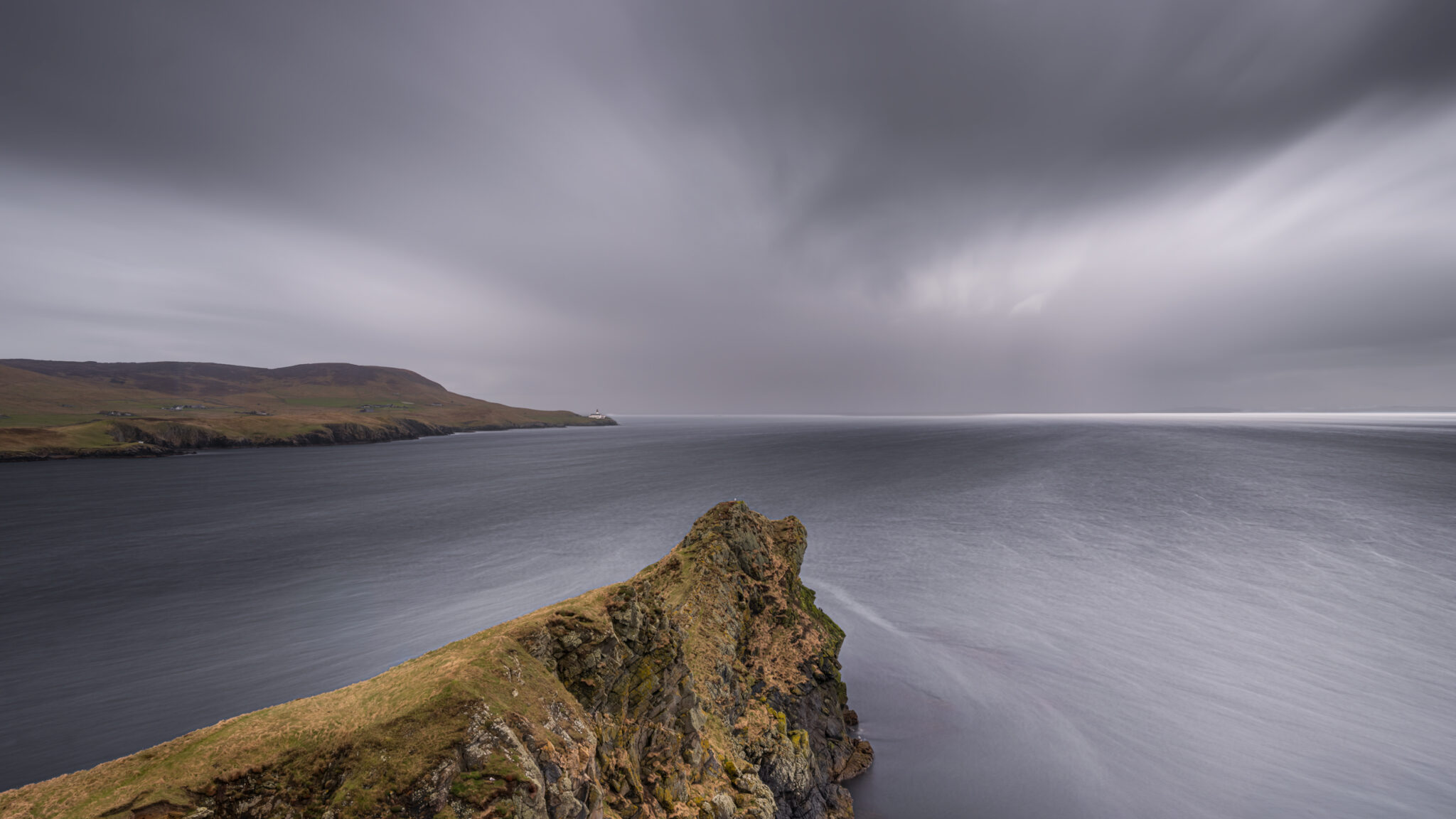
Image 6: This is an interesting one because I think a camera-club judge would recognise immediately that the photographer has deliberately rejected the obvious view. The photograph is built around shape, scale and negative space rather than spectacular light.
I’d place it at 17/20. It is accomplished and thoughtful, but I think there are compositional issues that would make 19 difficult.
The AI Camera-Club Judge's Critique
“This is a very thoughtful panoramic landscape in which the photographer has used scale and negative space extremely effectively. I particularly enjoy that dramatic triangular foreground, which projects us out into this enormous expanse of water, while the distant coastline provides a lovely counter-movement from the left.
Eventually we discover that tiny white building on the distant headland, and for me that’s an important little detail because it gives us an extraordinary sense of scale.
The long exposure has been handled particularly well. There is still directional texture within the water rather than simply a completely smooth surface, and I enjoy the subtle transition from darker tones on the left towards the lighter water on the right.
My principal reservation concerns the foreground. It’s visually strong enough to become the main subject, but its abrupt intersection with the bottom edge makes me wonder whether I would have preferred either a little more of it or rather less. I also find the brighter water on the right beginning to draw my attention towards the edge.
Nevertheless, this is a sophisticated and confidently composed landscape which makes very good use of space and scale.”
AI Score: 17/20
“I’d regard that as a solid 17, potentially 18 with a judge particularly receptive to understated landscapes.
What prevents 19 or 20?
For me, 19 isn’t being withheld because of processing. It’s principally the visual hierarchy.
I’m not completely certain what the photograph wants me to care about most.
The foreground rock says look at me.
The little building says discover me.
The enormous sea says experience the space.
Those three ideas are interesting, but they don’t quite resolve into one overwhelming visual statement.
I’d experiment with two alternative crops, but importantly I wouldn’t assume either is better than the original. One would take a modest amount from the bottom, making the promontory more obviously a graphical device. The other—if the original file allows it—would include more foreground and allow the headland to become unequivocally the main subject.
I would also darken the far-right water fractionally and perhaps soften the microcontrast in the foreground.
I would not crop away the empty sea. That’s actually one of the photograph’s strengths”.
Then I Asked AI A Different Question
At this point I had six individual critiques and six scores:
19, 18, 18, 18, 17 and 17
But the scores weren’t really the interesting part.
So I asked the AI to forget about judging them individually and consider all six photographs collectively.
What were this photographer’s strengths?
What were the weaknesses?
Could it identify a style?
And how could the photographer improve?
This is where the experiment became genuinely thought-provoking.
The AI identified recurring characteristics across the six photographs.
Space, Subdued Colour, Adverse Weather, Simplicity, Long Exposure, isolation and Atmosphere.
It suggested that the photographer was comfortable allowing large areas of a frame to contain very little and that negative space was one of the strongest recurring characteristics.
It also identified an attraction towards small objects within much larger environments and landscapes that were more melancholic than spectacular.
That felt remarkably close to how I increasingly think about my own photography.
But then came the criticism.
And this was probably the most valuable part of the whole exercise.
"The photographer occasionally doesn't trust the photograph enough".
That was perhaps the AI’s most interesting conclusion.
It noticed a tendency to help the viewer.
A waterfall becomes a little brighter.
A dramatic sky becomes a little darker.
Turquoise water becomes slightly more colourful.
A focal point receives a little more local contrast.
None of those things was considered excessive in isolation.
But across six images, the pattern became visible.
And that made me think.
As photographers, we spend an enormous amount of time learning how to control the viewer’s eye.
We dodge.
We burn.
We increase contrast.
We add masks.
We darken edges.
We brighten subjects.
All perfectly legitimate techniques.
But perhaps there comes a point where we stop guiding the viewer and start telling them exactly where to look.
The AI’s suggestion was surprisingly simple.
Trust the photograph more.
What Did I Learn From An Artificial Judge?
I’m not about to hand over responsibility for judging photography to artificial intelligence.
Photography is subjective.
A different human judge could have placed those six photographs in a completely different order. Another AI assessment might do the same.
And a score out of 20 certainly doesn’t determine whether a photograph has value.
But that wasn’t really the point of my experiment.
Nor do I think an AI judgement should be treated as somehow more objective simply because it comes from a machine. It is still an interpretation, and one that can be questioned just as we might question the opinion of a human judge.
What I found useful was AI’s ability to look across six photographs without knowing where they were taken, what equipment I’d used, how difficult the conditions were or what emotional attachment I might have to them.
It could only respond to what was inside the frame.
And when asked to look at the six collectively, it identified patterns that are much harder for us to see in our own work.
Perhaps that’s where this technology becomes interesting for photographers.
Not as something that tells us whether a photograph is good or bad.
But as another pair of eyes.
Something we can challenge, disagree with and occasionally allow to make us question our own decisions.
The Most Interesting Result Wasn't The Winner
Before doing this experiment, I might have expected the traditionally constructed boat photograph to perform particularly well.
Strong subject. Dramatic weather. Beautiful landscape.
Instead, it finished joint bottom of the six.
The highest-rated photograph was darker, less immediately descriptive and more ambiguous.
Interestingly, some of the AI’s strongest responses were to the photographs where I had allowed more space, more uncertainty and more atmosphere.
That doesn’t prove anything.
But it does reinforce something I’ve increasingly felt about my photography.
The photographs that feel most like me aren’t necessarily the spectacular ones.
They’re often the quieter ones.
The ones where weather hides rather than reveals.
Where subjects become smaller.
Where empty space is allowed to remain empty.
Where perhaps we don’t see everything immediately.
And where the viewer has to do a little work.
Would I Use AI To Judge My Photographs Again?
Yes.
But not because I particularly care whether it gives me 17, 18 or 19 out of 20.
I’d use it because of the questions it made me ask myself.
Why am I brightening that?
Does the sky really need more contrast?
Is that colour genuinely helping?
Do I need to consider a different aspect ratio?
Do I need the viewer to see that immediately?
Am I improving the photograph – or simply making it more obvious?
I didn’t agree with everything. Some suggestions I would probably ignore, and I’m certainly not about to alter every photograph simply because the AI judge suggested I should. In some cases, the very thing it identified as a weakness may have been a deliberate creative decision.
Perhaps thats the unexpected value I found in putting six photographs in front of an AI camera-club judge.
I went looking for scores.
Instead, I ended up thinking about photographic identity.
And perhaps the most useful piece of criticism wasn’t about composition, sharpness, colour or technique at all.
It was much simpler.
Trust the quiet photograph.
PHOTOGRAPHY WORKSHOPS
If you’d like to explore some of these ideas — composition, simplicity, observation and developing your own photographic style — you can find details of my small-group landscape photography workshops here.